Most of the thinking you've done about issues so far has been analytical and intellectual in nature. However, the way people respond to issues that concern them is just as often emotional or even spiritual. Some people can say exactly how they feel as written or spoken text, but for others, visual art serves as a better vehicle for expressing emotional and spiritual responses to an issue.
Art often relies on symbols to represent the meaning or cultural significance of a topic rather than the basic facts involved. Study the images in the slides below to see examples of artwork that represents ideas using symbols.
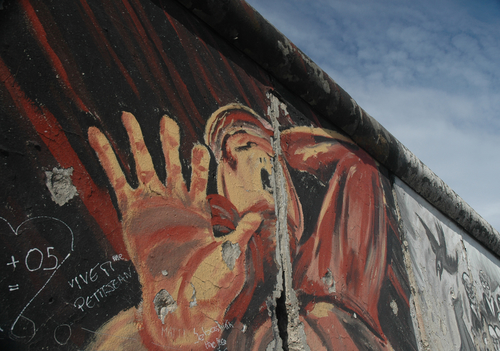
This part of the Berlin Wall, which separated East and West Germany for nearly half a century, developed a crack that a graffiti artist enhanced with symbolic art.
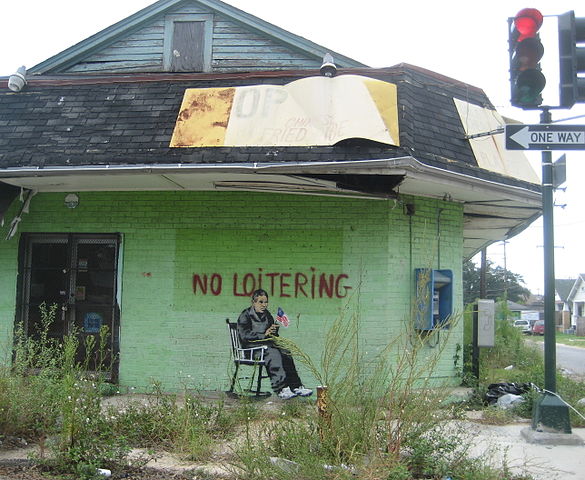
This is graffiti art by "Banksy" in New Orleans' Lower 9th Ward, on a building that has been derelict since the Hurricane Katrina levee failure disaster of 2005. What do you think came first--the No Loitering sign or the painting of the resident in the chair?
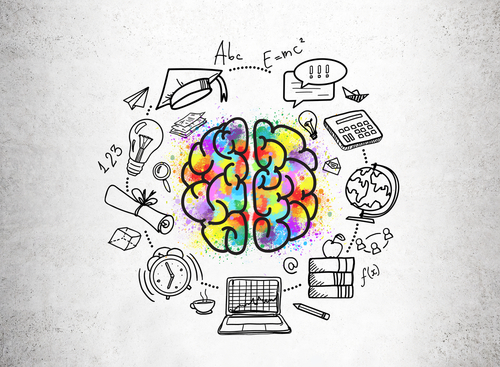
Artwork that is meant to be symbolic may combine simple line drawings with more complex uses of color.
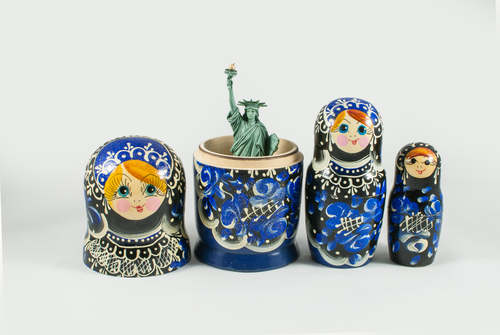
Here an artist simply staged a symbolic "scene" and photographed it.
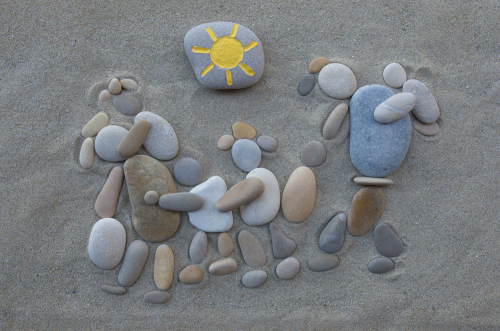
This temporary work of art, arranged in sand, represents refugees escaping from Syria.

This digital collage is made using a software program like Photoshop.
|
 |

| Criterion | 5 | 3 | 1 |
| Symbolism | Your artwork integrates powerful, well-chosen symbols in a way that conveys the essential conflicts at the heart of the issue. | Your artwork makes use of symbols in a way that conveys an essential conflict at the heart of the issue. | Your artwork includes few or no symbols that might convey the conflicts involved in the issue. |
| Detail/Complexity | Your artwork includes many carefully selected details that help convey the complexity of the issue you investigated. | Your artwork includes some details that help convey the complexity of the issue you investigated. | Your artwork includes few details to help convey the complexity of the issue you investigated. |
| Explanation | The text you included with or within your artwork creates a clear and compelling context for its visual elements. | The text you included with or within your artwork provides context for its visual elements. | The text you included with or within your artwork does not provide context, or you did not include text. |
| Overall Effect | The various elements of your project combine and interact to produce a powerful impression on viewers. | The various elements in your project work together to create a general overall impression. | The elements of your project don’t seem to belong together and therefore do not work to create an overall impression. |
