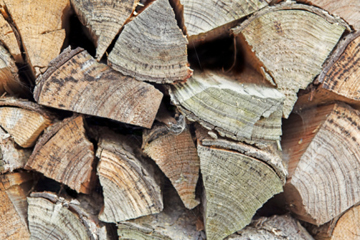
Biomass fuels include wood, wood waste, straw, manure, sugarcane, and many other byproducts from agricultural processes. When burned, the energy in the biomass is released as heat. What is now called biomass was the main source of heat for thousands of years in the form of fires, wood stoves, and furnaces.
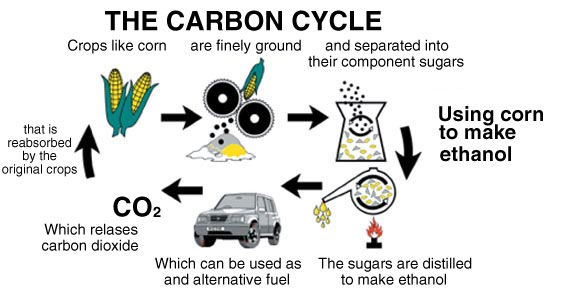
Biofuel is fuel made from agricultural waste products or agricultural products themselves, such as corn used to make ethanol. Study the diagram below to see how the carbon cycle of corn-ethanol fuel works.
Biomass and Carbon Dioxide
Like fossil fuels, biomass produces carbon dioxide when it's burned. How is the production of carbon dioxide from biomass different from the carbon dioxide produced by fossil fuel combustion?
Fossil fuels release carbon dioxide from carbon that was stored deep in the ground for millions of years. Biomass releases relatively modern carbon--carbon that was taken up by the plant very recently. In this way, biomass production does not add "new" carbon to earth's surface. Fossil fuels, however, do add "new" carbon to the surface because before we burned the fossil fuels, all that carbon was stored deep underground.
