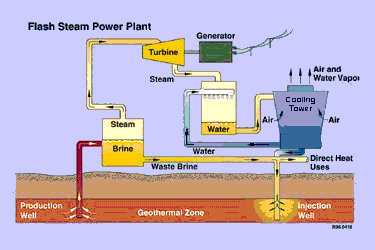
At a geothermal power plant, water is withdrawn from deep inside the Earth through a production well. The water is hot and under great amounts of pressure. Through a process called flashing, the pressurized water is converted to steam. The steam turns a turbine and generates the production of electricity at a generator. After the steam is used, it cools, is collected in a cooling tower, and then gets pumped back down into the ground to replenish the water that was initially withdrawn. This way no water is wasted, and the supply of hot underground water does not run out. 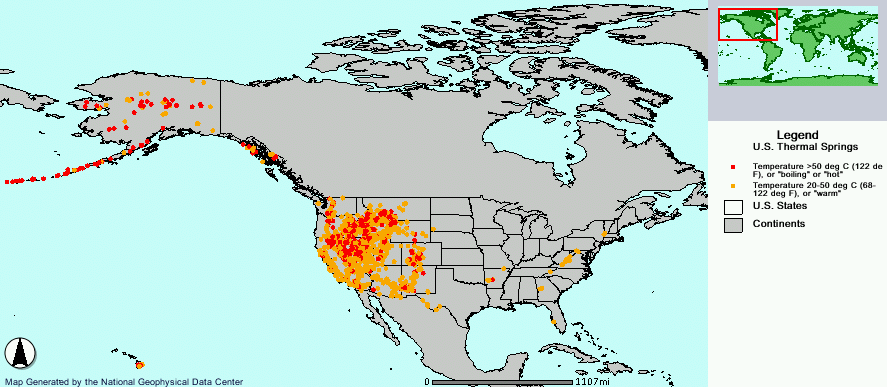
Geothermally heated water is closer to Earth's surface in some places than it is in others. Countries that have the best access to geothermal energy are Iceland, Chile, the United States, the Philippines, Italy, and New Zealand. In the US, geothermal electricity is generated in 5 states: Alaska, California, Hawaii, Nevada, and Utah. As of 2007, there were plans to build new geothermal power plants in 7 other states with suitable geologic features, mostly in the western part of the country. The Energy Policy Act of 2005 makes geothermal plants eligible for federal tax benefits, giving a boost to geothermal energy in the US. The United States generates an average of 15 billion kilowatt hours of geothermal power per year, comparable to burning some 25 million barrels of oil or 6 million short tons of coal per year. Six million Americans get their electricity from geothermal energy. In 1999, Santa Monica, California became the first city in the US to get all its electricity from geothermal sources.
|
 |
|||||||||||||

