Hydropower, which is derived from the energy of flowing water, has been around for hundreds of years. Click through the images below to learn more about how flowing water can be used to generate electricity.
Hydroelectric Power PlantsThis diagram shows you the parts of a hydroelectric power plant. A dam is built across a river to hold back water in a collection area called a reservoir. The water is kept behind the intake opening, so it is under pressure. When the intake is opened, water rushes through a tube called the penstock. Energy from the moving water then turns the turbine blades. The spinning turbine in turn makes magnets spin in the generator. And the spinning magnets in the generator produce electricity, which is then sent out from the power plant through various transmission lines. The water returns to the river through a device called a spillway. Nothing is burned, and no air pollution is given off. 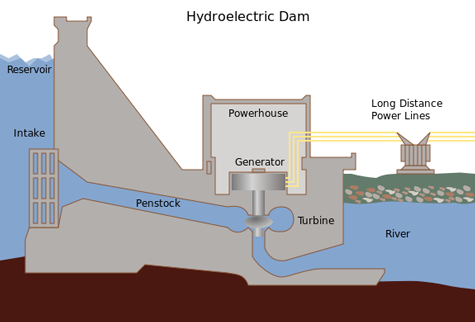
Close-up View of a Hydroelectric TurbineThis diagram is a close-up view of a turbine and generator in a hydroelectric power plant. Again, you can see how water pushes on the blades of the turbine, which then spins and makes parts of the generator spin to produce electricity. 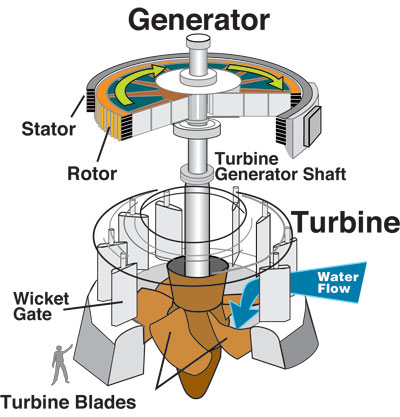
Worldwide Trends in HydropowerHydropower is the leading renewable energy source worldwide. The small pie chart in the bottom of the picture shows you all sources of energy, with fossil fuels accounting for a large percentage. The top pie chart shows you the main sources of renewable energy, with hydropower in light blue being the main source of renewable energy. In the US, hydroelectric power supplies about 7% of our energy needs, but it supplies nearly 50% of the electricity used on the West Coast because of the high occurrence there of suitable rivers. 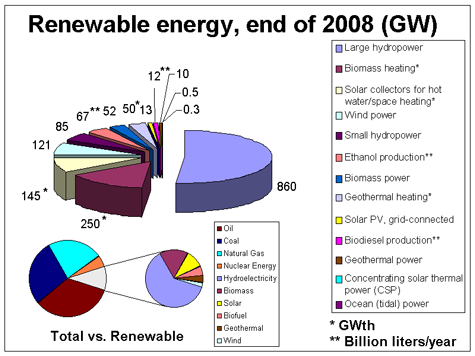
In the United States, dams and reservoirs have been created along about 98% of the suitable rivers for hydropower. Therefore, there is little room for expansion of hydropower in the US, but on a worldwide basis, only about 13% of the hydropower potential has been tapped. China, India, South America, and Africa can still use much more hydropower. The World Energy Council estimates that Africa uses only 7% of its potential hydropower, Asia only 22%, and South America only 33%. |
 |

