|
Solar energy can be used to heat homes and buildings and for heating water. One means of doing this is passive solar heating. A passive solar heating system absorbs heat from the sun and stores the heat within a structure. It does NOT rely on any mechanical device to distribute the heat. Basically, passive solar heating is what happens in your car when it sits in the sun. Passive solar heating relies on using windows and building materials oriented toward the sun to take advantage of incoming solar energy in the most efficient way.
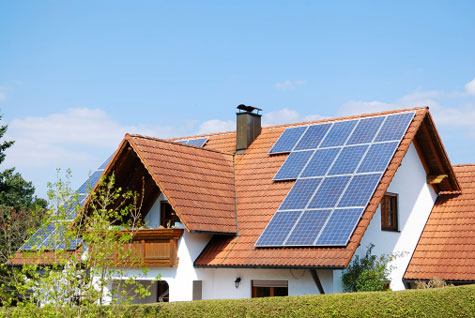
Active solar heating involves absorbing energy from the sun and then pumping a heat-absorbing fluid through special collectors mounted on the roof or on special racks oriented toward the sun. Unlike passive solar heating, active solar heating relies on some sort of collector and a mechanical device to distribute the heat in the structure involved. The home in this picture has solar energy collectors on the roof. They collect heat energy, which is then pumped through the house to heat rooms and water.
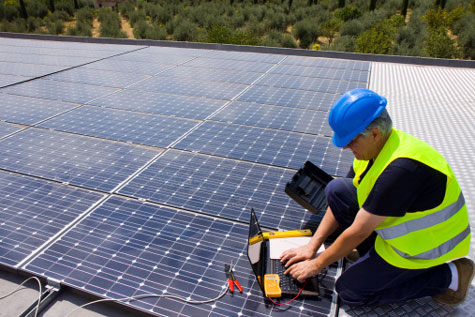
You've seen so far how solar energy can be used to heat homes and water. Energy from the sun can also be converted to electrical energy. Photovoltaic cells are one means of doing this. Commonly called solar cells or just PV cells, these are thin wafers of purified silicon with trace amounts of metals that allow them to act as semiconductors of heat. When sunlight strikes the cells, they emit electrons that then flow and create electrical current. Because each cell produces only a small amount of electricity, many cells are wired together in a panel. Photovoltaic cells can be connected to a battery to store the electrical energy until needed. They are quiet, pollution-free, and can be incorporated into traditional roofing materials so they can be used to provide electricity for whole buildings. (They can also be made small enough to power just your watch or your calculator.) PV cells have the potential to provide electricity for millions of people worldwide who live in remote rural areas and don't have access to electricity from traditional power plants. PV cells' big drawback right now is that manufacturing them is expensive, but their cost is expected to go down as new technologies are studied.
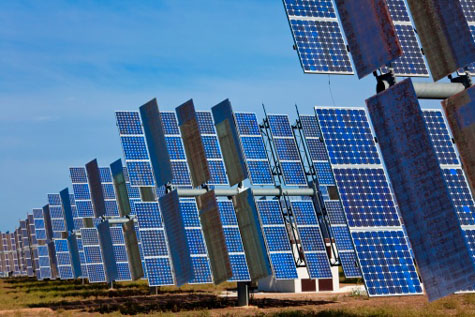
Solar power plants work much in the same way as other power plants that we have learned about. Water is heated by the sun, brought to boiling to produce steam, and the steam then turns a turbine and powers a generator. Because high temperatures are needed to heat the water to boiling, solar power plants use concentrator units to concentrate the energy from the sun. These systems are used most commonly in desert areas with ample sunlight. Most have natural gas turbines that can provide backup electricity on cloudy days or at night. |
 |