There are three major classes of mollusks--Gastropoda, Bivalvia, and Cephalopoda. There are some features common to mollusks, such as having the same five organ systems--respiratory, excretory, digestive, reproductive, and circulatory. There are six body parts that mollusks also share. What are these common body parts? Think about the answer, then click "Show Me" to see if you are correct.

Mollusks have a visceral body, foot, mantle, coelom, radula, and one or two shells.
Although there are many similarities among mollusks, there are some significant differences, especially among the different classes. Gastropods are the snails and slugs; bivalves are the mussels, oysters, scallops, and clams; and cephalopods are the squid, nautiluses, octopuses, and cuttlefish.
Most people are very familiar with class Gastropoda because these mollusks--snails and slugs--are often seen in gardens. Some snails are even considered a culinary delight among humans. Gastropods range in size from so small that they can only be viewed with a microscope to those as long as baseball bat. Click through the activity below to learn about the class of Phylum Mollusca known as Gastropoda.
Shells
Habitat
Locomotion
Feeding
Senses
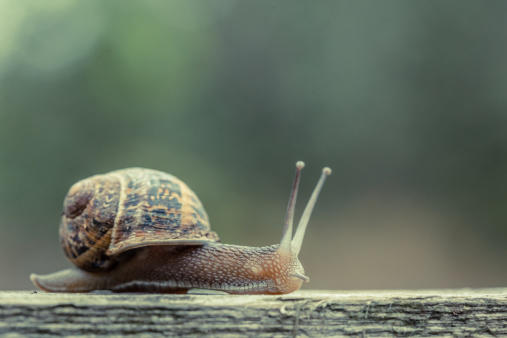
All snails have a single shell.
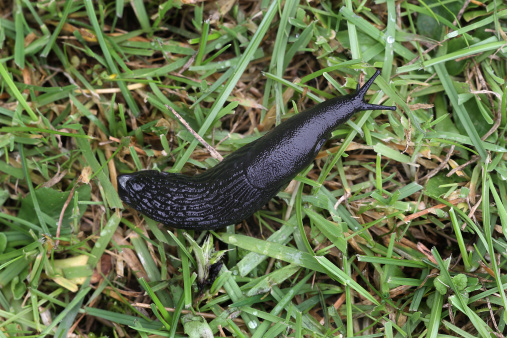
Slugs have no shell.
Snails and slugs belong to class Gastropoda. Snails have a single shell, and slugs have evolved into having no shell.

Some gastropods, like this snail, are terrestrial.
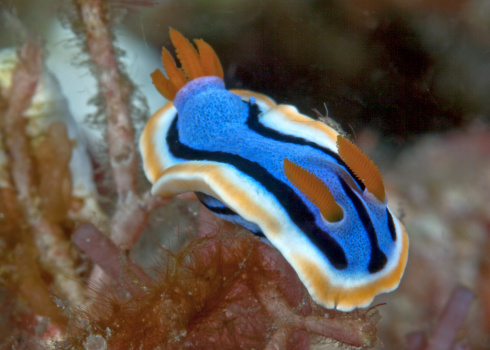
Some gastropods, like this sea slug, are marine.
Gastropods live on land and in both salt and fresh water. Those that live on land are considered terrestrial, and those that live in salt water are considered marine.
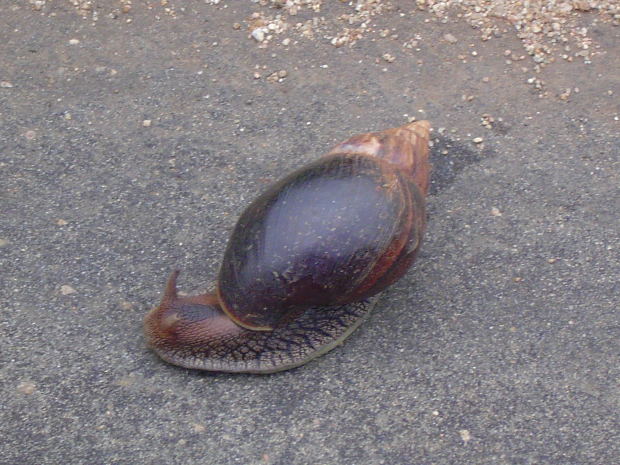
The foot in snails, as in all mollusks, is used for locomotion. The foot in terrestrial gastropods is highly specialized to get around on land. It secretes a mucus that creates a slippery path, allowing the gastropod to glide along with ease from place to place. A small trail of mucus is visible in the image.
What do terrestrial gastropods secrete to allow for easy locomotion on land? Think of the answer, then click "Show Me" to see if you are correct.
Terrestrial gastropods secrete a mucus from their foot for easy movement.
![By User:Debivort.Philcha at en.wikipedia [GFDL (http://www.gnu.org/copyleft/fdl.html) or CC-BY-SA-3.0 (http://creativecommons.org/licenses/by-sa/3.0/)], from Wikimedia Commons](https://s3.amazonaws.com/cms.accelerate-ed.com/image/ea754770-8b2d-4d72-b51a-59641b29b82d.png)
![By L. P. van Ofwegen [CC-BY-3.0 (http://creativecommons.org/licenses/by/3.0)], via Wikimedia Commons](https://s3.amazonaws.com/cms.accelerate-ed.com/image/88beaaa8-6722-4e5b-9ab4-96b6b8eb7328.png)
All mollusks (except for bivalves) have a radula. What is a radula? Think of the answer, then click "Show Me" to see if you are correct.
A radula is a tongue-like structure, located in the mouths of mollusks. On its surface are backward curved teeth.
The image on the left displays how a radula works. The gastropod sticks out its radula and scrapes the food source (pictured in blue), then returns the radula to its mouth to swallow the food. This mechanism is a problem for humans when it comes to their crops and gardens. The radula of many snails and slugs shred the leaves of important plants. To the right is a close up image of the teeth, which are very sharp.
Some gastropods are strict herbivores that scrape algae off rocks. Others are ferocious predators, such as the oyster drill, which uses its radula to bore a hole in the shell of other mollusks--bivalves. It then sucks out the soft body of the bivalve.
![By Snežana Trifunović (Own work) [GFDL (http://www.gnu.org/copyleft/fdl.html) or CC-BY-SA-3.0 (http://creativecommons.org/licenses/by-sa/3.0/)], via Wikimedia Commons](https://s3.amazonaws.com/cms.accelerate-ed.com/image/32caaf18-1a8b-4a5b-bf30-38fcbdb51636.jpg)
All gastropods have a pair of tentacles on their head region, as pictured. At the end of each tentacle is an eye, which is sensitive light and touch.
In the activity below, think about the answer, then click the card to see if you are correct. When you feel comfortable with the knowledge, click the check mark. If you still need to review the concept, click the X to review that card again.
Give two examples of gastropods.
snails and slugs
How are terrestrial gastropods' feet modified to move on land?
The foot of terrestrial gastropods secretes a mucus that helps them glide with ease on land.
Why are some garden gastropods considered pests?
The teeth on their radula tear up the leaves of plants.
What gastropods have a single shell, and what gastropods have no shell?
Snails have a single shell, and slugs have no shell.
What do all gastropods have located on their head region?
All gastropods have a pair of tentacles with eyes at the tips that are sensitive to light and touch.
Cards remaining:
