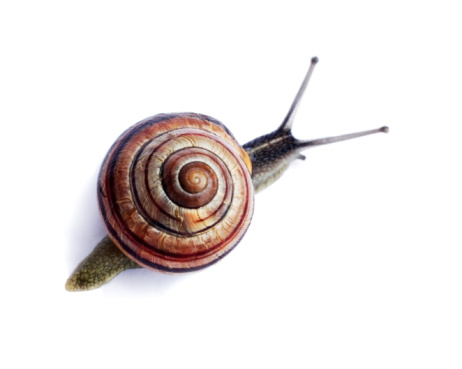
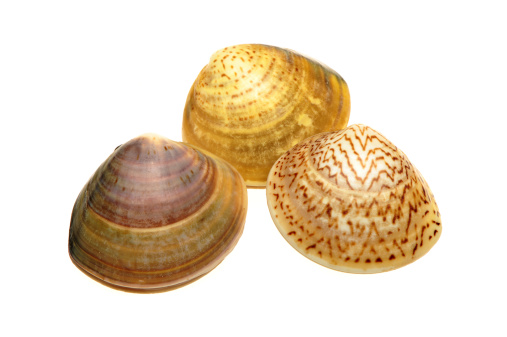
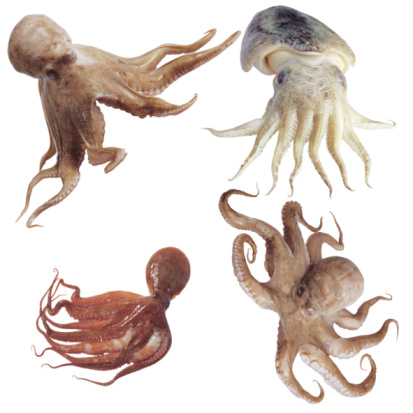
Mollusks are extremely varied. They are divided into seven different classes, with three classes being the most common--Gastropoda (snails and slugs), Bivalvia (oysters, clams, and scallops), and Cephalopoda (squids, octopuses, nautiluses, and cuttlefish). Even though the animals that make up the phylum Mollusca are obviously very different from each other, there are some major characteristics that every mollusk has in common. For example, all mollusks share the same body symmetry. Take a look at the mollusks pictured. Can you figure out what type of symmetry they all have? Think of the answer, then click "Show Me" to see if you are correct.

Mollusks have bilateral symmetry.
Click through the activity below to learn about the first three common body parts amongst mollusks. On the next page are the last three common body parts of mollusks.
Visceral Mass
Mantle
Foot
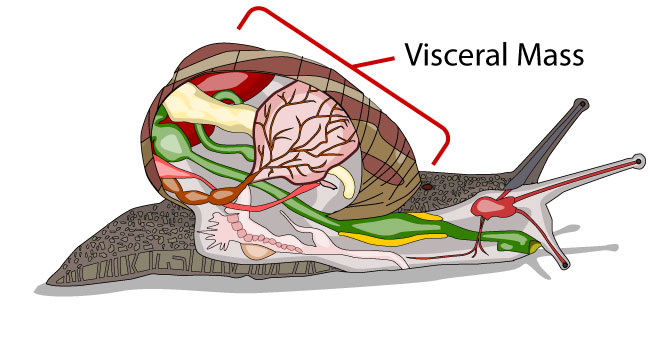
All mollusks have a visceral mass, which is a centralized region of the body in which all the organs are located, as indicated in the image.
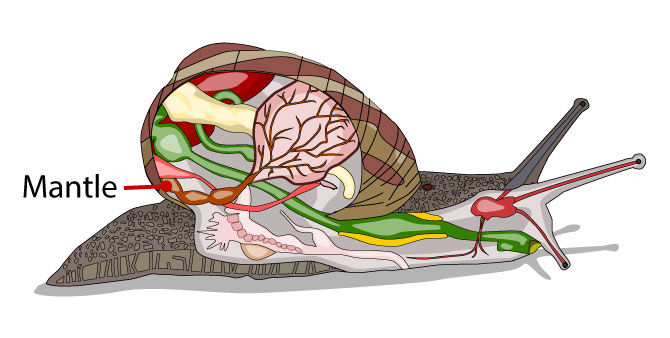
The mantle is a heavy fold of tissue that encloses the mollusk's body and is what creates the shells of mollusks. The mantle also creates a small empty space called the mantle cavity.
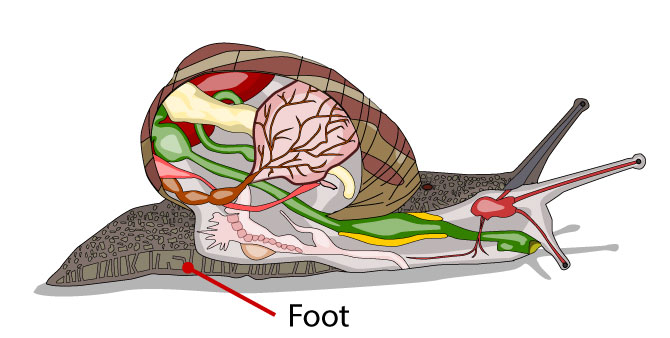
All mollusks have a foot, which is a highly muscular region specialized for locomotion.
Jot down an answer to each of these questions--or say the answer to yourself--before clicking the question to check your understanding of some of the characteristics of mollusks.
| What type of symmetry do all mollusks have? | All mollusks have bilateral symmetry. |
| What is the highly muscular region that helps the mollusk move? | Mollusks have a foot to help them move. |
| What part of the mollusk creates the shell? | The mantle creates the shell. |
| What is the centralized region of the body of the mollusk where all the organs are located? | The visceral mass is the centralized region of the body. |
