Recall that a population is a group of individuals that live close to each other and are able to interbreed because they are the same species. One way to describe a population is by its size. Population size is the number of individuals in the population. The boundaries of a population may be naturally occurring, or they may be defined by the person studying them, like the number of birds in a particular forest or the number of humans in a county. These individuals may be able to interbreed with others outside the boundaries, but defining the perimeter of the population allows us to categorize individuals based on where they live and compare different habitats or parts of the world. Humans can obviously travel from one country to another, but it is still meaningful to compare the population of one country to another.
Size is an important characteristic of a population because large and small populations evolve in different ways. Larger populations are usually more genetically diverse, so they are less likely to go extinct. Smaller populations are more susceptible to disease and will have fewer new mutations in each generation (because there are fewer individuals). If we know the size of the population, we can predict how it will evolve over time. Knowing population size is important, as is identifying changes in population size.
Click through the tabs below to see examples of why changes in population size are important. As you read, think about how information about changes in population size can be used.
Conservation
Bioindicators
Planning for the Future
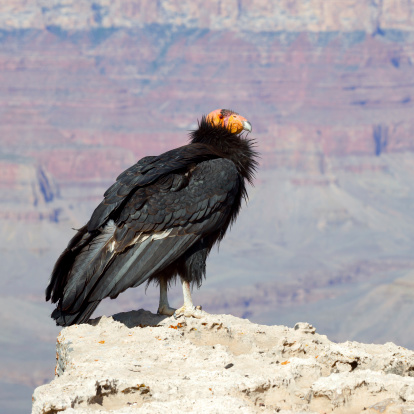 We can track how population size increases and decreases to identify species that are at risk of becoming endangered or extinct. If we notice these trends in time, we may be able to intervene with conservation efforts to preserve biodiversity. The California condor, shown here, was on the brink of extinction in the 1980s but was saved by emergency conservation efforts.
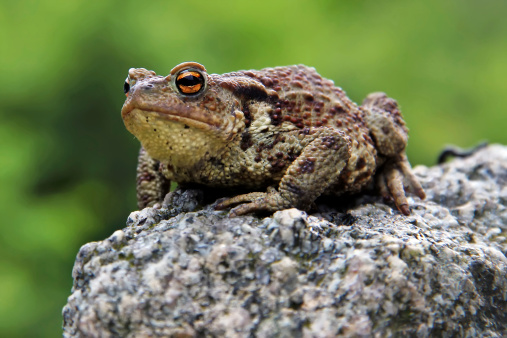 Some animals are highly sensitive to environmental changes, such as increased pollution or changes in temperature. For example, amphibians like frogs absorb many substances from the water through their skin, so they are particularly susceptible to toxins that are present in the water. Changes in population sizes in these species can be indicators of environmental damage, giving us a chance to try to prevent further damage.
 If we know how the size of a population is changing in response to other factors, we can predict how it will change in the future and attempt to prepare for those changes. Some models predict that the world population will reach 10 billion by the end of this century. Considering such possibilities shapes agricultural practices, land use, global politics, and innovations in technology.
Use the activity below to test your understanding of population size and why it matters. Do the factors on the left depend on population size or not?
|
population evolves over time
|
depends on population size
does not depend on population size
|
|
susceptibility to disease
|
depends on population size
does not depend on population size
|
|
genetic diversity
|
depends on population size
does not depend on population size
|
Complete
