Like other countries in Southeast Asia, Indonesia and the Philippines struggle with a diversity of languages and cultures. In Indonesia, an island nation made up of more than 13,000 islands, more than 250 languages are spoken. Across the Philippines and its 7,100 islands, 70 languages and dialects are spoken.
Indonesia
The Philippines
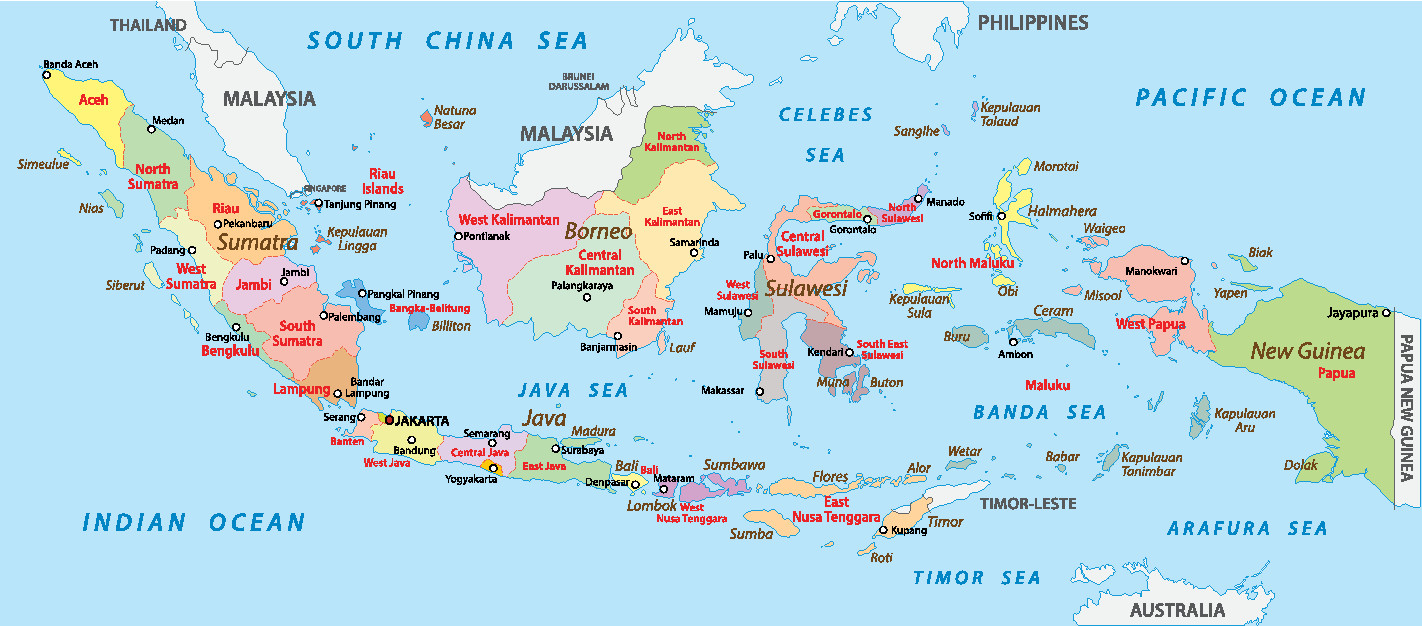
Keeping Indonesia united has required a lot of effort. There are more than 228 million people living on the Indonesian islands; therefore, unity has been maintained mostly by force and by violating people's human rights. A strong government backed by the military ruled for 32 years. And, because of the policies that give Indonesians a general lack of personal freedom, the strong government did improve the economy. The per capita income rose from $50 dollars to $960 over the course of 30 years. This is mostly due to oil production, which has allowed Indonesia to build roads, airports, and schools.

the city of Manila for work. From there they often leave the country altogether.
The Philippines were ruled under the Spanish crown for nearly 300 years. Then the country became a territory of the United States after the Spanish-American war in 1898. It wasn’t until 1946 that the Philippines became an independent nation. Colonialism had a deep and lasting effect in the Philippines. For example, about 83% of the current population is Roman Catholic, a religion brought over by the Spanish. Many native Filipinos married Spanish people, which helped to unite the two cultures. In addition, the United States brought over an educational system in which English was the primary language, and today, besides Tagalog, English is one of the official languages of the Philippines. The United States also brought democracy to the country. The amount of western cultural influence helped the Philippines develop a sense of national unity. But in spite of this strong sense of national identity, many Filipinos move to other countries to work because of the Philippines' weak economy and widespread unemployment.
