The countries of Vietnam, Laos, and Cambodia are ethnically very different, but they have a shared history—and they they have many things in common. All three countries were heavily influenced by India, and most of the residents of these three countries are Buddhist. Vietnam, Laos, and Cambodia were also French colonies and are collectively known as French Indochina. During World War II, the Japanese took control of Indochina, and at the end of the war, France wanted to regain control of the region.
Vietnamese Independence
Spread of Communism
Vietnam, Laos, and Cambodia today
Click Picture For More Information
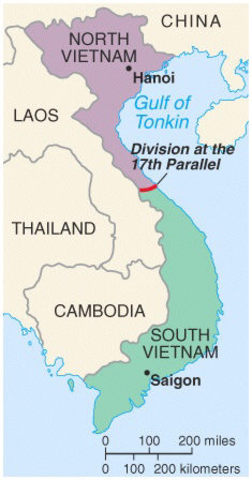
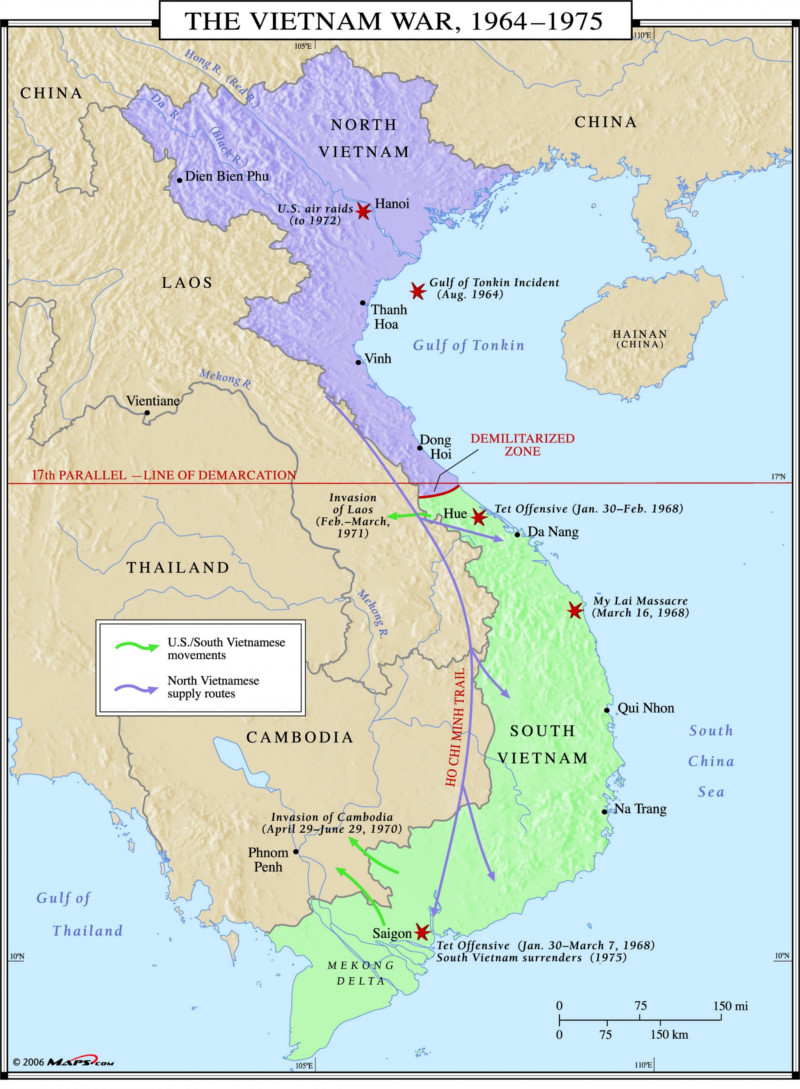
In 1945, Ho Chi Minh, a Vietnamese leader, declared Vietnam independence from France. This sparked a war with the French, and in 1954, the country finally gained its independence. After a peace conference held in Switzerland, though, more fighting broke out, and Vietnam ended up being divided into two parts. North Vietnam was to be ruled by a Communist government under Ho Chi Minh. South Vietnam was given to Ngo Dinh Diem, who wanted a more Western-style government. Communist supporters living in South Vietnam wanted to reunite the two countries, but the United States supported South Vietnam in a war to keep the region free from communism.
Click Picture For More Information
Laos and Cambodia were drawn into the war against communism, and these two countries provided supplies to Communist supporters in South Vietnam; additionally, Cambodia hosted North Vietnamese military bases. In 1973, the United States withdrew from the war, and South Vietnam fell to the Communists. Eventually Communist governments also gained control in Cambodia and Laos, and these regimes killed large numbers of people who did not support the Communist governments.

Under communism, Vietnam faced tough economic problems, so in 1986, they began a program to change their practices and attract foreign investors. By the 1990s the economy was growing, and Vietnam had become the second largest exporter of rice in the world. The United States resumed economic relations with Vietnam in 1995; then in 2001, the U.S. signed a trade agreement because of Vietnam’s low cost of production for exported goods. Though there are more economic freedoms in Vietnam, Laos, and Cambodia, the governments still do not allow for all political freedoms.x
