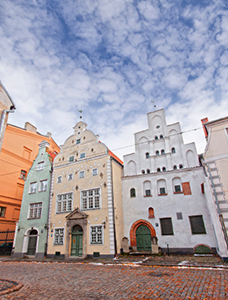
 Suppose you are walking down the street with a friend and she says, "Look at that house." There are dozens of houses around you, so you ask, "Which one?"
"The pretty one," she replies.
Still unsure of which one she means (they all look pretty to you), you ask, "Which pretty one?"
She sighs and says, "The yellow brick one."
"Ah," you say. "You should have said that in the first place."
You finally know exactly which house she was referring to. And all it took was some precise language.
When you go beyond the general (house) to create a specific picture with words (yellow brick house) you're using precise language. Being precise means simply giving specific details that help readers to clearly visualize, or see, the scene and understand exactly what is happening, thus pulling them into the world of the story. When you use general words, your readers will relate the words to their own lives. They won't necessarily imagine what you want them to see.
Think you can tell the difference between general and precise language? Each of these flashcards presents one word. Decide if that word is general or precise. Then check your answer by clicking the card.
Precise or General?
leaded-glass Tiffany lamp
precise
Precise or General?
cat
general
Precise or General?
convertible car
precise
Precise or General?
food
general
Precise or General?
verbena daisy
precise
Summary
 Correct:
 Incorrect:
