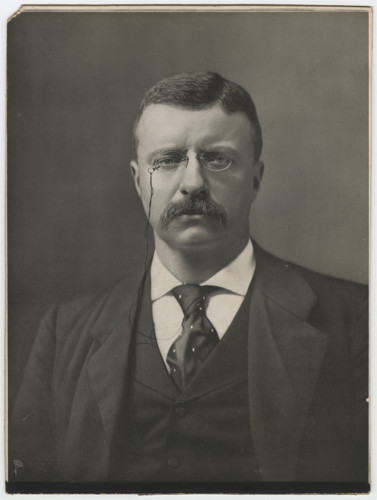
In 1898, after returning from the Spanish-American War, Roosevelt ran for governor of New York on the basis of his war record. He won the election by just one percent of the vote. Once in office, Roosevelt came in close contact with trusts and monopolies and had to address issues related to labor relations. He held press conferences twice each day, which was a novel approach to public relations at the time. Roosevelt favored the practice because it allowed him greater access to the media.
Although he only served two years as governor, Roosevelt used the opportunity to develop the concepts and priorities that would later define his presidency: an insistence upon corporate responsibility, a willingness to assert control over trusts, the regulation of railroad rates, and a commitment to protecting the weakest members of society. As governor, Roosevelt tried to balance the interests of corporations with those of the general public; he backed the Ford Franchise-Tax bill, which declared that a corporation "should pay to the State a just percentage of its earnings as a return for the privileges it enjoys". Later in his career, this balanced approach became one of the notable elements of his presidency.
While governor, Roosevelt had hoped to become Secretary of War under President McKinley, but he was not offered that post. However, since he was governor of the most populous state in the nation, it seemed likely that he could and would run for higher office. Roosevelt decided that he was not quite ready to run against McKinley, though, who was up for re-election in 1900.
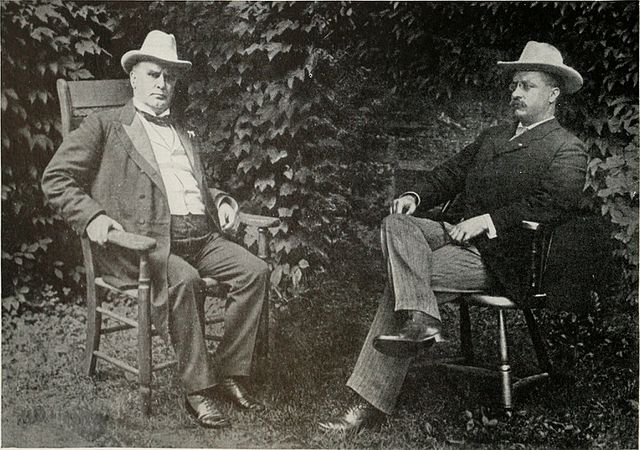
pose for a photograph in 1901.
Then, in 1901, Roosevelt became McKinley's vice president, at least partly as a result of his unpopularity among prominent New York businessmen, who may have helped persuade McKinley to offer Roosevelt the post. Roosevelt had intended to institute a corporate tax in New York, and it seemed to many of the powerful men of the period that he would cause their fortunes far less harm as vice president than as governor of their state. Soon after McKinley’s second term as president began, he was killed by a gunman while visiting the Pan-American Exposition in Buffalo, New York. Suddenly, Theodore Roosevelt was president. At age 42, he became the youngest American ever to fill the office.
Question
How were the leaders of large companies likely to feel about Roosevelt's sudden rise to Presidential power?
