In many ways, the domestic policies of Theodore Roosevelt contrasted sharply with his ‘big stick’ foreign policies. Throughout his presidency, Roosevelt seemed to side with the oppressed classes in the United States. He also led or supported causes that would be consider progressive today. Study the examples of Roosevelt's domestic legacy below.
Racial Equality
National Park System
Trust-Busting
Labor Protections
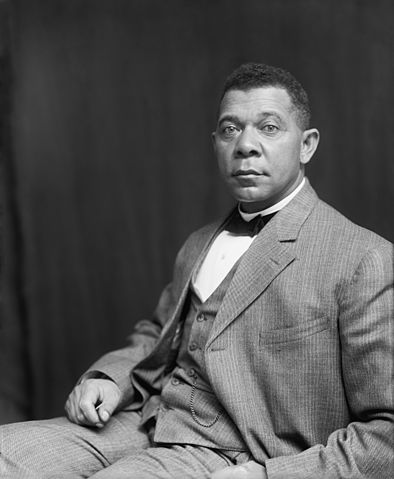
Roosevelt found himself in the spotlight after inviting Booker T. Washington to visit him at the White House soon after the beginning of his presidency. The famous black educator was both a friend and an advisor to Roosevelt. There were unforeseen repercussions and one southern newspaper called this event "the most damnable outrage which has ever been perpetrated by any citizen of the United States." Roosevelt would later attend a highly publicized meeting with Booker T. Washington at Tuskegee Institute in Alabama. However, it would be 30 years before another African American was invited to visit the White House.
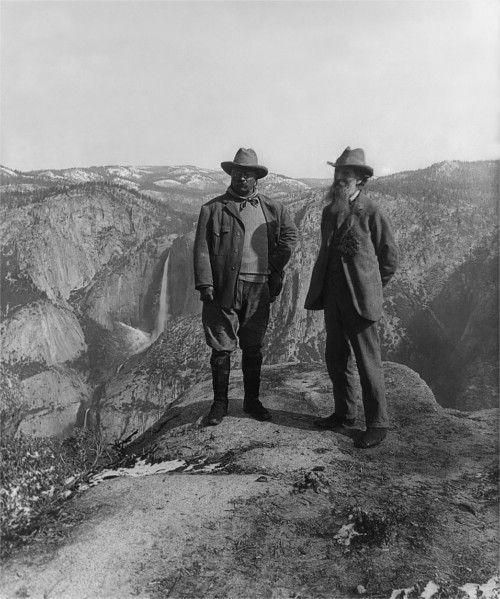
In the early 20th century, many Americans were worried that rapid population growth might threaten the nation's pristine park lands. Roosevelt championed a significant effort to create regulations for the preservation and conservation of federal lands. He commented: "We have fallen heirs to the most glorious heritage a people ever received, and each one must do his part if we wish to show that the nation is worthy of its good fortune." After becoming president in 1901, Roosevelt started the United States Forest Service (USFS) and established 150 national forests, 51 federal bird reserves, 4 national game preserves, 5 national parks. He also started 18 national monuments with the 1906 American Antiquities Act. During his presidency, Roosevelt protected approximately 230 million acres of public land.
Roosevelt strenuously opposed corporate efforts intended to establish illegal monopolies or "trusts." He was willing to take on even the most prominent representatives of industry when he felt that it was necessary to protect consumers and free enterprise. For example, Roosevelt prosecuted the Northern Securities Trust Company and managed to reduce the power of regional railroad officials, who were charging different rates to rail users depending upon the size of their companies. This effort was actually spearheaded by the railroad executives who found such anti-competitive practices within their industry unacceptable.
When Roosevelt entered office, the mining industry had endured numerous labor strikes, and local officials had generally met such resistance with force. In 1902 Roosevelt intervened in the Anthracite Coal strike in Pennsylvania since he believed that the continued supply of coal was a national security concern. Historically the federal government had often intervened with troops that supported the owners. But Roosevelt instead informed the owners that although he planned to send troops he had no intention of using them against the United Mine Workers. Instead, the federal troops would 'fill in' for the mine workers while they were on strike and do their jobs. This was not at all what the owners were expecting since Roosevelt also informed them that the government would retain the profits from the mine, so they quickly ended the dispute. Although the benefits that Roosevelt managed to negotiate for the miners were short-lived, his stature increased following his announcement of this "Square Deal" policy in relation to labor disputes.
Additionally, Roosevelt advocated for improved working conditions for women and the elimination of child labor. These efforts cast him in the role of ‘progressive’, which was a position that he gladly assumed and continued to champion until his untimely death in 1919.
How well do you understand Roosevelt's more "progressive" policies? Try answering the questions below.
What happened when Teddy Roosevelt invited a famous African-American educator to the White House?
Roosevelt chose not to invite black leaders to the White House in the future.
Roosevelt chose not to invite black leaders to the White House in the future.
Roosevelt chose not to invite black leaders to the White House in the future.
What set of policies did Roosevelt use as an opportunity for numerous positive press photos?
There are numerous photographs of Roosevelt at park openings.
There are numerous photographs of Roosevelt at park openings.
There are numerous photographs of Roosevelt at park openings.
How did Roosevelt convince the Anthracite Mine owners to end their dispute with the workers?
The mine owners knew that Roosevelt wouldn't be around forever and they could revise the workers' contracts in the future.
The mine owners knew that Roosevelt wouldn't be around forever and they could revise the workers' contracts in the future.
The mine owners knew that Roosevelt wouldn't be around forever and they could revise the workers' contracts in the future.
You got # out of # correct. Click the Retry button for another attempt.
You got a perfect score. Great job!
