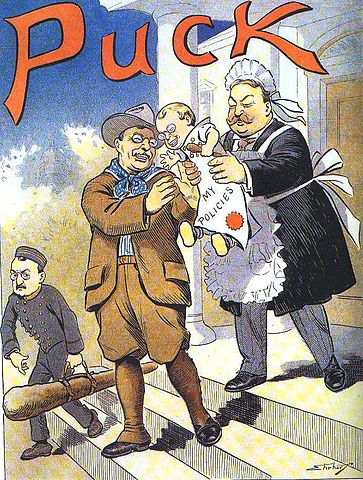
In 1909, following two full terms in office, Roosevelt had gained sufficient prestige with voters and within his party to select the next Republican presidential candidate, and he chose his War Secretary William Howard Taft. But Roosevelt soon found himself at odds with Taft’s approach to dealing with global events. Also, some members of the government (including Taft) were not entirely convinced that Roosevelt’s policies would work. Consequently, one of Taft’s main problems was that during his administration the implementation of Roosevelt's policies remained a strategic priority, yet the relationship between the two men was tense to the point of hostility. In fact, Roosevelt tried to regain the presidency in 1912 as a third party Progressive candidate, announcing “My hat is in the ring, the fight is on and I am stripped to the buff.” Thereafter, the Progressive party became known as the Bull Moose Party.
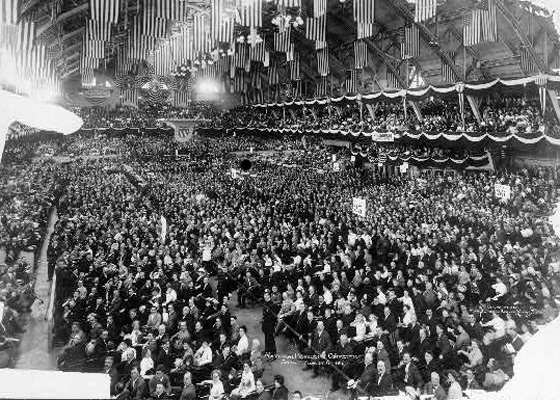
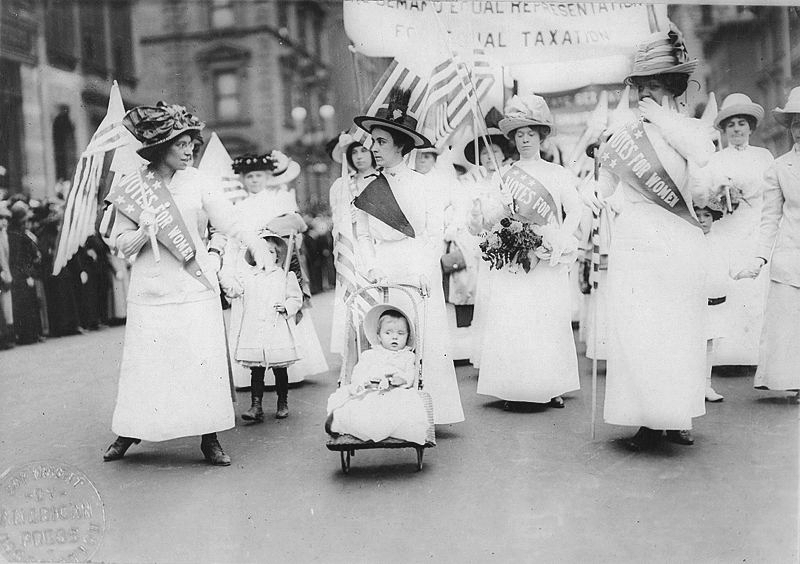
The platform of the Progressive Party carried forward most of the social policies introduced during Roosevelt’s presidency. One of the main issues before the electorate concerned women’s right to vote. The suffragette movement was supported by both the Progressives and the Socialist Party, which was led by Eugene Debs and carried a significant percentage of the total vote (6%). Roosevelt ended up receiving more votes than the incumbent President Taft. Ultimately, the presence of the Progressive Party split the Republican ticket, allowing Democratic candidate Woodrow Wilson to prevail. He became president in 1912.
On October 14, 1912, Roosevelt had been speaking before a large audience in a Milwaukee hotel when an "unemployed saloonkeeper" shot him in the chest. Roosevelt continued his speech and only afterwards allowed himself to be brought to a hospital. The bullet was never removed. The man who shot Roosevelt claimed that William McKinley’s ghost told him to kill Roosevelt to prevent others from seeking a third term. The event clearly endeared Roosevelt to the American public and served to expand his base of popularity despite his departure from politics.
To hear Theodore Roosevelt's own perspective on the Progressive party and its virtues, listen to the audio file below--Roosevelt's Address to the Boys Progressive League, 1901.
