Soon after assuming office, President Roosevelt set about enlarging the capability of the U.S. Navy. From 1907 to 1909, the "Great White Fleet," a group of modern steel ships selected from the Atlantic Fleet and painted white, circumnavigated the globe primarily as a show of force. The official mission for the Great White Fleet was to provide an opportunity for the Navy to improve their navigation skills and to practice using modern communication equipment. Roosevelt also believed, however, that the event would help Americans think about something other than the economic depression that had begun in 1907.
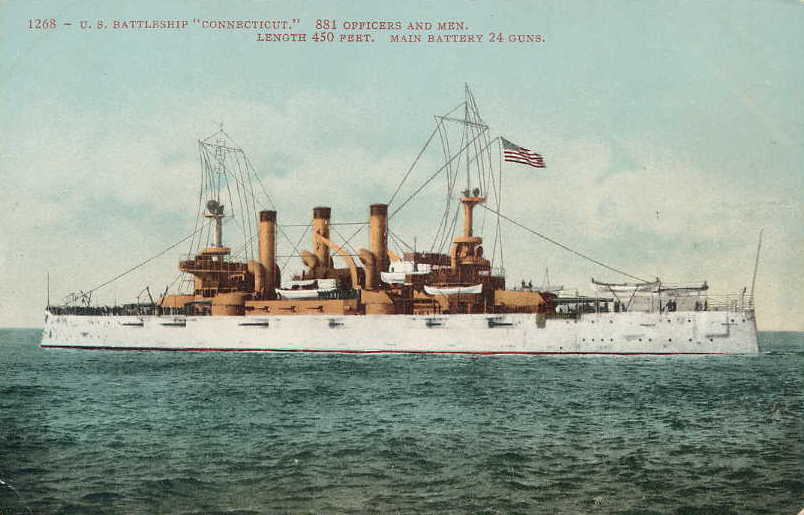
This display also had a practical benefit: it encouraged the Russian Czar to sue for peace with France, avoiding a potential large-scale conflict. Also, the U.S. had quickly taken control of former Spanish fortresses in Manila, Puerto Rico and Havana to use as naval bases, and the White Fleet was meant to reassure the sailors in these locations that help was never far away.
The activities of the Great White Fleet and the obvious extensions of U.S. military influence into the Pacific region were controversial, both in the U.S. and abroad. It seemed to anyone who looked at a map that both Hawaii and the Philippines were very isolated, and it could be difficult to defend them even with Marines stationed there. So, the presence of the Great White Fleet additionally served to warn off any potential enemy powers.
Question
How many war ships and sailors participated in the Great White Fleet?
