Sometime during the next decade, people your age will become the generation to watch--you'll finish college and head out into the world to make your mark on industry, art, science, and politics. Who will step up to lead your generation? What ideals and philosophies will guide your leaders' decisions? The non-profit organization Step Up & Pay (SUP) is more concerned about these questions than most. Its members are adults who currently act as leaders in a wide range of fields, from film to finance to food preparation. (Yes, there are "iron chefs" in this crowd.)

|

|

|

|

|

|
The members of SUP prefer not to leave the selection of future leaders to chance. They want to help your generation identify its leaders early on, and they hope to help inspire and guide those leaders to be great examples for the rest of you. So here's what SUP did: They created a series of conferences designed to help high school students develop leadership skills that will serve them and their peers well in the future. SUP asked thousands of high school freshmen and sophomores to select the students in their schools who seemed to be natural leaders. The catch? These students could not already hold official leadership positions. They had to be selected based on personality and social interaction rather than obvious ambition. That means that quite a few of the people nominated for SUP retreats were surprised to find themselves there.
The first SUP conference will be called 21st Renaissance: Tomorrow's Leaders Today. The attendees are already selected, and SUP is now planning the workshops, panel discussions, and activities for the event. Everyone at SUP agrees that it's important to make a great first impression if they hope to inspire the students attending the conference. For help with that first impression, they have turned to you--that is, to students who are likely to know about the Renaissance because they're currently studying it in school. They need your help to make the conference theme seem relevant to the kids at their conference. After all, SUP can't inspire future leaders until they convince them that SUP understands their generation enough to help guide them.
How can the lessons of Europe's Age of Discovery inspire a generation of 21st-century leaders? For this project, you will create a multimedia introduction that could be used to kick off 21st Renaissance: Tomorrow's Leaders Today. Your introduction should speak directly to the high school students that Step Up & Pay has invited to their conference--people of your generation who want to make it big when it's their turn to run the world.
Remember that Step Up & Pay is looking for an introduction that will help high school students see how the events and people of Europe's Age of Discovery can help them develop an approach to leadership that works and feels right. That doesn't mean that everything about that era should be applied to the 21st century--some of the things that happened are things we never want to repeat. Your job is to sort out the good from the bad, the useful from the just plain wrong. And of course, you'll need to do that in a way that makes sense to other high school students.
The Activity sheet below should help you get your project started. It suggests some steps to use in creating your presentation. Remember that your introduction should be both engaging and informative as well as based on fact. You won't have time to cover all of the events, people, and themes of the Age of Discovery, so you'll need to choose your topics wisely.
This project should take you a couple of hours to complete, so don't expect to finish it today. In fact, if you are near the end of the time period you have set aside for World History, you may need to wait until tomorrow to start the project.
When you are ready to start working on your project, click the Activity button. To see how your work on this assignment will be graded, click the Rubric button.
The European Renaissance transformed Europe and the world. What caused the startling changes that occurred in Western Europe between the late 1300s and the early 1700s? Was it money and the desire for wealth? Was it the love of art and beauty? The search for a more meaningful life?
Look back through the lessons in this module, and think about the causes behind the economic, social, and religious changes in Europe during the Renaissance. Then, answer these questions in the Discussion area for your course. Also respond to the posts of several other students in your class.
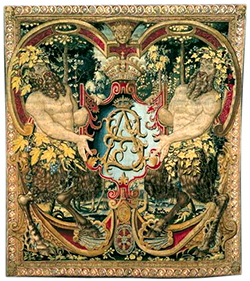 Question 1
What conditions in Europe led to the Renaissance in art and culture? Was it mostly a political and economic movement, or mostly a cultural movement?
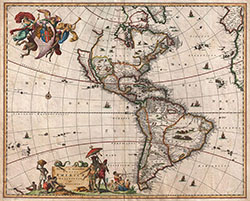 Question 2
What do you think the world would look like today if Europe had not experienced its Age of Discovery? Explain how the world might be different if there had been no European exploration and expansion. Include at least two examples of how the world would look or act if things had gone differently.
Sometime during the next decade, people your age will become the generation to watch--you'll finish college and head out into the world to make your mark on industry, art, science, and politics. Who will step up to lead your generation? What ideals and philosophies will guide your leaders' decisions? The non-profit organization Step Up & Pay (SUP) is more concerned about these questions than most. Its members are adults who currently act as leaders in a wide range of fields, from film to finance to food preparation. (Yes, there are "iron chefs" in this crowd.)
|
|
|
|
|
|
|
|
The members of SUP prefer not to leave the selection of future leaders to chance. They want to help your generation identify its leaders early on, and they hope to help inspire and guide those leaders to be great examples for the rest of you. So here's what SUP did: They created a series of conferences designed to help high school students develop leadership skills that will serve them and their peers well in the future. SUP asked thousands of high school freshmen and sophomores to select the students in their schools who seemed to be natural leaders. The catch? These students could not already hold official leadership positions. They had to be selected based on personality and social interaction rather than obvious ambition. That means that quite a few of the people nominated for SUP retreats were surprised to find themselves there.
The first SUP conference will be called 21st Renaissance: Tomorrow's Leaders Today. The attendees are already selected, and SUP is now planning the workshops, panel discussions, and activities for the event. Everyone at SUP agrees that it's important to make a great first impression if they hope to inspire the students attending the conference. For help with that first impression, they have turned to you--that is, to students who are likely to know about the Renaissance because they're currently studying it in school. They need your help to make the conference theme seem relevant to the kids at their conference. After all, SUP can't inspire future leaders until they convince them that SUP understands their generation enough to help guide them.
How can the lessons of Europe's Age of Discovery inspire a generation of 21st-century leaders? For this project, you will create a multimedia introduction that could be used to kick off 21st Renaissance: Tomorrow's Leaders Today. Your introduction should speak directly to the high school students that Step Up & Pay has invited to their conference--people of your generation who want to make it big when it's their turn to run the world.
Remember that Step Up & Pay is looking for an introduction that will help high school students see how the events and people of Europe's Age of Discovery can help them develop an approach to leadership that works and feels right. That doesn't mean that everything about that era should be applied to the 21st century--some of the things that happened are things we never want to repeat. Your job is to sort out the good from the bad, the useful from the just plain wrong. And of course, you'll need to do that in a way that makes sense to other high school students.
The Activity sheet below should help you get your project started. It suggests some steps to use in creating your presentation. Remember that your introduction should be both engaging and informative as well as based on fact. You won't have time to cover all of the events, people, and themes of the Age of Discovery, so you'll need to choose your topics wisely.
This project should take you a couple of hours to complete, so don't expect to finish it today. In fact, if you are near the end of the time period you have set aside for World History, you may need to wait until tomorrow to start the project.
When you are ready to start working on your project, click the Activity button. To see how your work on this assignment will be graded, click the Rubric button.
