Patrons gave artists the money they needed to live and work--and also the respect and recognition they desired to feel successful. What did patrons receive in return? First, they commissioned and acquired great works of art for their homes. But were there other benefits as well? As you have probably figured out, the Renaissance was an era during which wealthy people (mostly merchants and church leaders) played a game of power and influence. Art was one way that these political players could demonstrate their status to both their friends and their enemies.
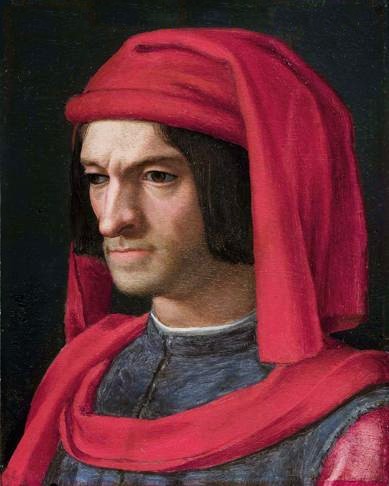 The Medici family of Florence is the best-known example of Renaissance patronage. The Medicis were very successful merchants and bankers who used art to create luxurious "palaces" to impress their many visitors. This method of appearing sophisticated and well-connected helped them do business with other powerful and wealthy families--and with the Catholic Church. The Medicis also commissioned public statues and works of architecture to make their city, Florence, the most beautiful town in Italy. In this way, they won the gratitude and loyalty of the city's residents.
The Medicis commissioned both religious and secular (non-religious) works of art. They supported the churches of Florence by commissioning statues, frescoes, and other works with religious themes, but the Medicis also asked artists to create illustrations of Greek and Roman myths and portraits of living individuals, particular the members of their own family. They decorated their palaces with artwork that used flowers, animals, and other elements of nature as subjects. For the Medicis, the main purpose of art was to enhance their own prestige and to make themselves look both successful and generous.
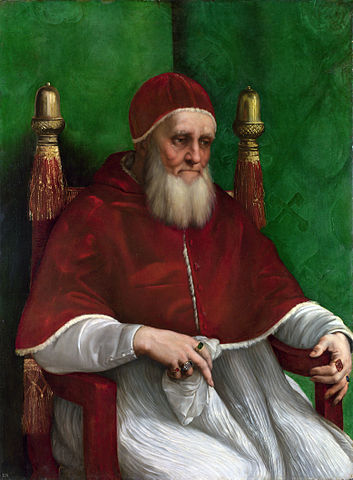 The Catholic Church--and its pope in particular--were the Medicis' main "rivals" when it came to patronage of the arts (when the pope himself was not a Medici). The pope lived in Rome, which was considered the holy city of Catholicism. Rome was visited every year by thousands of Roman Catholic pilgrims from all over Europe. Therefore, the Church commissioned art that would awe visitors, and impress upon them the Church's great and unquestionable authority. The works of art in Rome's cathedrals could be beautiful, but they also had to be spiritually uplifting and emotionally moving since art in this context was supposed to bring people closer to God.
Because of patronage by merchant families and Church officials, the arts thrived in Renaissance Italy. The great artists of the Italian Renaissance, including Raphael, Botticelli, Michelangelo, and da Vinci, found many willing patrons among Italy's elite.
Question
You have seen many works of Renaissance art in this lesson. Can you recall one secular work and one religious work of art?
