 “Renaissance” is an adjective most often applied to art. Renaissance painting in particular is seen as a high point in the history of European art. Paintings from this period swept away the rigid, unrealistic figures of medieval art, replacing them with naturalistic human figures whose faces and bodies conveyed joy, sorrow, pleasure, amazement, and grief with great intensity and realism. Some of the world’s most famous paintings come from the time of the European Renaissance.
|
The Glorification of Mary by Sandro Botticelli (1445-1510). Italian. One of the painters of the early Renaissance, Botticelli was one of the artists supported by the famous Medici family. Botticelli was known for the delicacy with which he portrayed facial expressions and movement. This painting of the Virgin Mary with the Christ child represents a popular subject in Europe. The original hangs in the Uffizi Gallery in Florence, Italy, along with many other works by Botticelli.
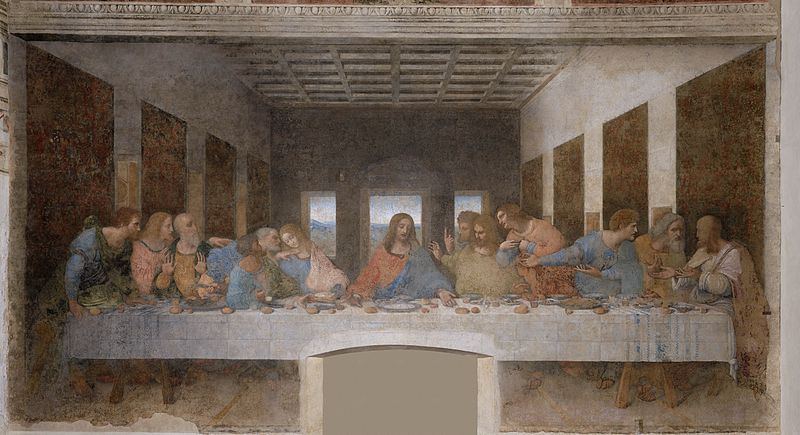
The Last Supper by Leonardo da Vinci (1452-1519). Italian. Because he excelled in so many subjects, da Vinci is often called a true Renaissance man. But he is still remembered primarily as an artist. Da Vinci created this fresco of Jesus having his last supper with his disciples for the church of Santa Maria della Grazie in Milan, Italy. A fresco is a painting done on a plaster wall while the plaster is still wet, or "fresh." This one has faded over time, but da Vinci's skill is still evident. The way figures are grouped together suggests a narrative, or story. The solitary figure of Jesus provides a focal point around which everything else occurs. Like other Renaissance artists, da Vinci used perspective, a technique which gave his paintings realistic three-dimensional (3-D) depth.
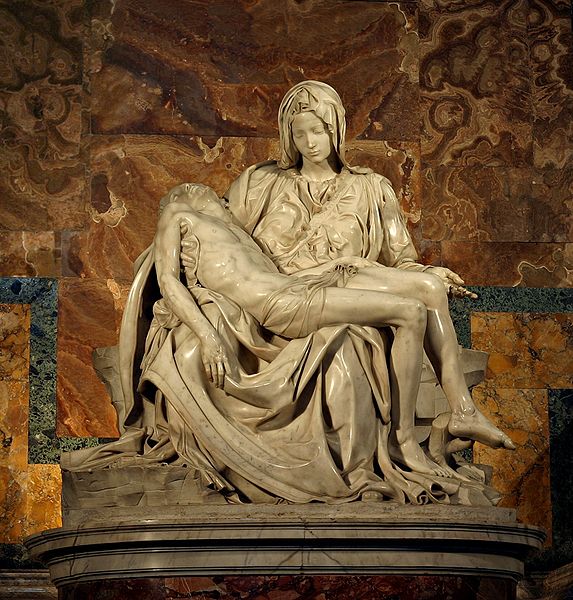
The Pieta by Michelangelo (1475-1564). Italian. Michelangelo is known as both a painter and a sculptor. He is often called the artist who brought marble to life. His figures are completely natural, as if caught for a moment in motion. This statue of Mary receiving the body of Jesus from the cross is among his most famous works. The expression on Mary's face is soft and realistic, showing both tenderness and pity. The statue resides in Saint Peter's Basilica in the Vatican, where Michelangelo also painted the ceiling of the Sistine Chapel.
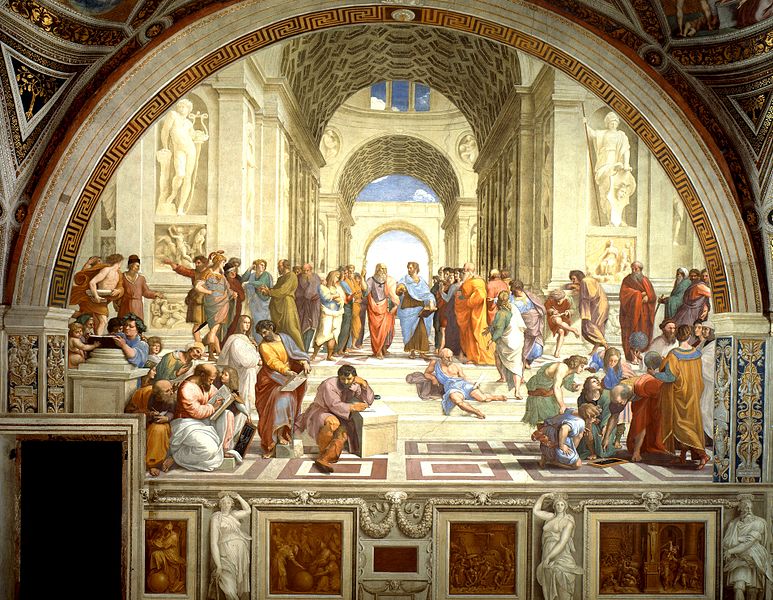
The School of Athens by Raphael (1483-1520). Italian. Like other Renaissance artists, Raphael depicted lifelike figures in natural poses. The revival of classical Greek literature inspired him to create this fresco showing the great Greek philosophers and their followers. Like da Vinci, Raphael often arranged the figures in his paintings to suggest a story. (This approach was different from earlier European art.) Like da Vinci's Last Supper, Raphael's work uses perspective to give the illusion of depth.
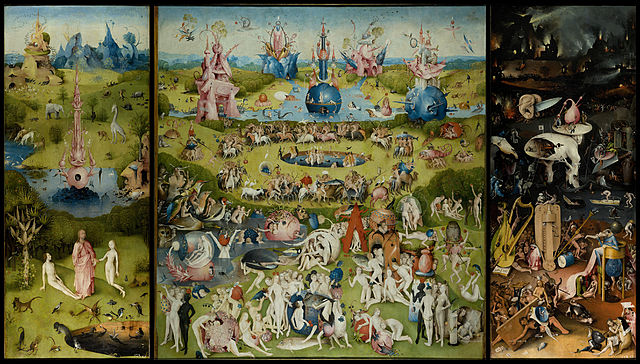
The Garden of Earthly Delights by Hieronymus Bosch (1450-1516). Dutch. Though Italy was the center of artistic innovation and growth during the Renaissance, the northern countries of Europe also experienced a blossoming of the visual arts. Hieronymus Bosch of the Netherlands used his vivid imagination to paint visions of heaven, hell, and earth. The Garden of Earthly Delights is a triptych, a painting done on three wooden panels. Bosch differed from many artists of his time in his use of fantasy, but he also added touches of realism--especially in the many "everyday" details of his scenes. Notice the cat carrying one of her kittens in the lower left corner. What other small details do you notice?
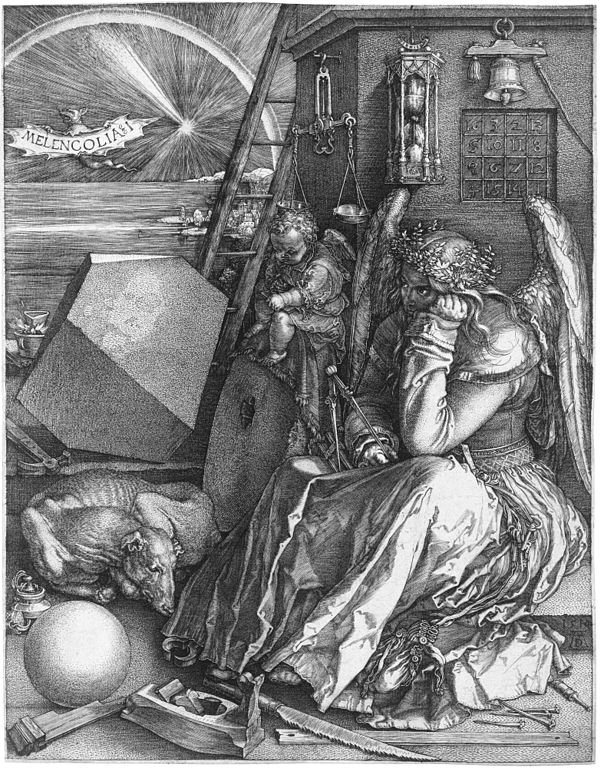
Melancholia by Albrecht Durer (1471-1528). German. Like Bosch, Durer was interested in both the imaginary and the real. He is most famous for his woodcuts, which were made by engraving an image on a block of wood, inking it, and then pressing it down on thick paper. In Melancholia a thoughtful angel appears next to a cherub and a greyhound dog, all surrounded by the tools of various trades. Can you find an hourglass, a compass, and a scale? What other instruments do you see? What might they have been used for?
|
 |


Question
Click through the slideshow again, focusing on the human figures in each painting, and recall what you learned earlier about the Renaissance philosophy of humanism. What role does the human figure play in these paintings? How are the human figures supposed to affect the viewer?
