
Script 1: Lindbergh Baby Kidnapped!
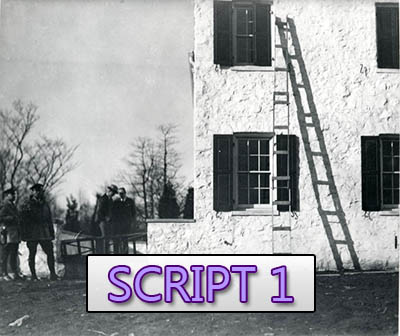
"Cruelest and most shocking crime of the century! Reporters working day and night reveal how it was done. A ladder planted against the Lindbergh home. The kidnappers climb up and into the nursery. They seize the tiny infant."
Script 1: Lindbergh Baby Kidnapped!
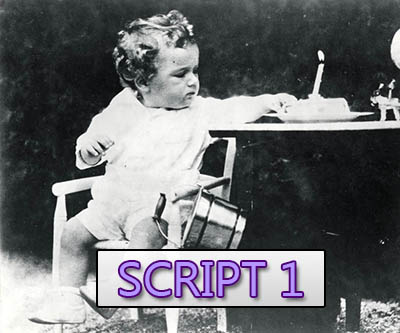
"Poor, innocent little fellow, he was sick and asleep at the time. But that didn’t stop the fiends—they carried him off! State troopers and police stage the greatest manhunt in history, prayers of the world following them."
Script 1: Lindbergh Baby Kidnapped!
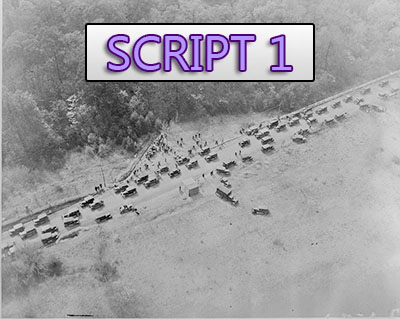
"T’was here the child was found—dead. And the hunt for the killers goes on. Once more a shocking message is sent out over the wires. The final solution of a hideous crime, ending one of the greatest manhunts in the history of criminology."
Script 1: Lindbergh Baby Kidnapped!
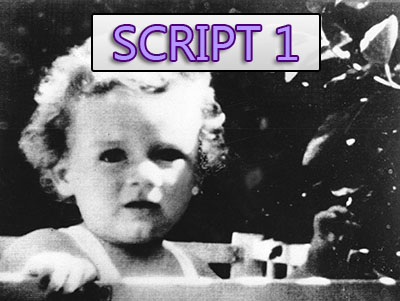
"Four miles from Hopewell, they found him. The pitiful little form unrecognizable except for its clothes. 73 days after he disappeared, stolen from his distinguished parents by the vilest creatures that walk."
Script 2: The Trail of Bruno Hauptmann
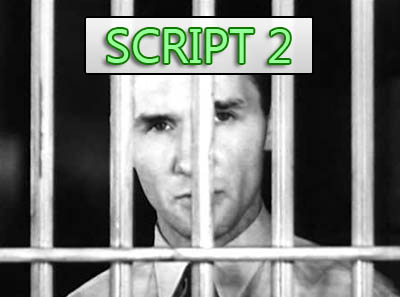
"Stern drama is being enacted today at the Hunterdon County courthouse at Flemington, New Jersey. Supreme Court judge Trencher has charged a grand jury to take up, with the help of Attorney General Wilentz, the case of Bruno Hauptmann."
Script 2: The Trail of Bruno Hauptmann

"Colonel Schwarzkopf, head of the New Jersey state police, and Colonel Charles A Lindbergh are the principal witnesses. Lindy, it is understood, positively identified Hauptmann by his voice as the man who got the ransom money."
Script 2: The Trail of Bruno Hauptmann
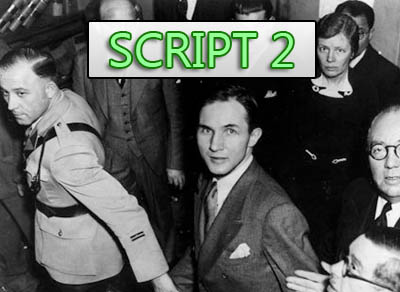
"Also, Millard Whited, a carpenter, says he saw Hauptmann nearby just before the kidnapping. As a result of the testimony, a grand jury, which included three women, has just handed an indictment charging Hauptmann with the murder of the Lindbergh baby."

Question
What words in Script 1 tell viewers how they should feel about the story?
the fiends
hideous crime
pitiful little form
vilest creatures that walk
Question
How does the language used in Script 2 differ from the language in Script 1?
Question
Why do you think Script 2 uses less "loaded" language?
