Read this first section of the FBI's write-up about the Lindbergh kidnapping case. What language tells you that this account is meant to be simply a presentation of the facts as they happened--in other words, a mere sequence of events?
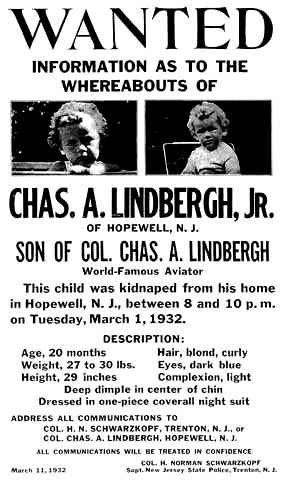 Charles Augustus Lindbergh, Jr., 20-month-old son of the famous aviator and Anne Morrow Lindbergh, was kidnapped about 9:00 p.m., on March 1, 1932, from the nursery on the second floor of the Lindbergh home near Hopewell, New Jersey. The child's absence was discovered and reported to his parents, who were then at home, at approximately 10:00 p.m. by the child's nurse, Betty Gow. A search of the premises was immediately made and a ransom note demanding $50,000 was found on the nursery window sill. After the Hopewell police were notified, the report was telephoned to the New Jersey State Police, who assumed charge of the investigation.
During the search at the kidnapping scene, traces of mud were found on the floor of the nursery. Footprints, impossible to measure, were found under the nursery window. Two sections of the ladder had been used in reaching the window. One of the two sections was split or broken where it joined the other, indicating that the ladder had broken during the ascent or descent. There were no blood stains in or about the nursery, nor were there any fingerprints.
Now read the third paragraph of the FBI report, which departs slightly from the sequence of events approach. What main idea does the FBI hope to get across in this paragraph?
Question
What main idea does this last paragraph develop?
