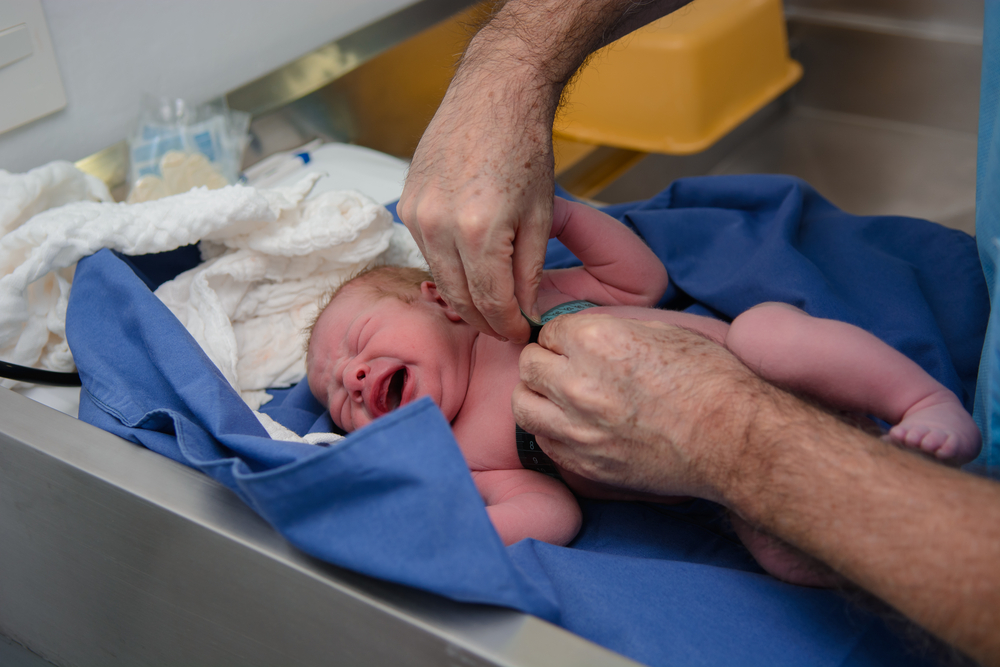
Use the table below to learn about changes that occur in the newborns’ first minutes and hours after birth.
| What? | When does it happen? | Why? |
|---|---|---|
| The infant cries while taking its first breath. | During or immediately after delivery. | The newborn can no longer rely on its mother for oxygen. The first breath forces open lungs that have never been inflated. (Think about how much harder it is to blow up a brand-new balloon than one that has been stretched out before.) |
| A fetal heart valve closes. | After breathing begins. Over the next few days, the valve becomes permanently sealed. | Before birth, circulation bypassed the fetus’s unused lungs. After birth, blood needs to flow to and from the newborn’s lungs to oxygenate its tissues. |
| The umbilical cord shrinks. | Within minutes of birth. | The cord is no longer needed to deliver nutrients and oxygen to the fetus. After birth, the infant breathes for itself and ingests breast milk or formula for nutrition. The cord is clamped and cut. |
| The infant’s hands and feet may look blue and feel cooler than the rest of the body. | Up to 24 hours after birth, occasionally longer. | The newborn’s immature circulatory system must adjust to life outside the temperature-controlled womb. Wrapping the newborn well and putting a cap on its head keep it warm until it is better able to regulate its body temperature. |
