When most people hear the word baby, they probably think of a child about 6 months old, smiling, gurgling, and looking around at the world. As a result, first-time parents are frequently shocked when their newborns are nothing like what they imagined. Let’s see what makes newborns different.
The HeadA newborn’s head is huge relative to the size of the rest of its body. In fact, the head is about one-fourth the baby’s total length. This big head is too heavy to be supported by the infant’s weak neck, so caregivers must support it when lifting or carrying the infant. 
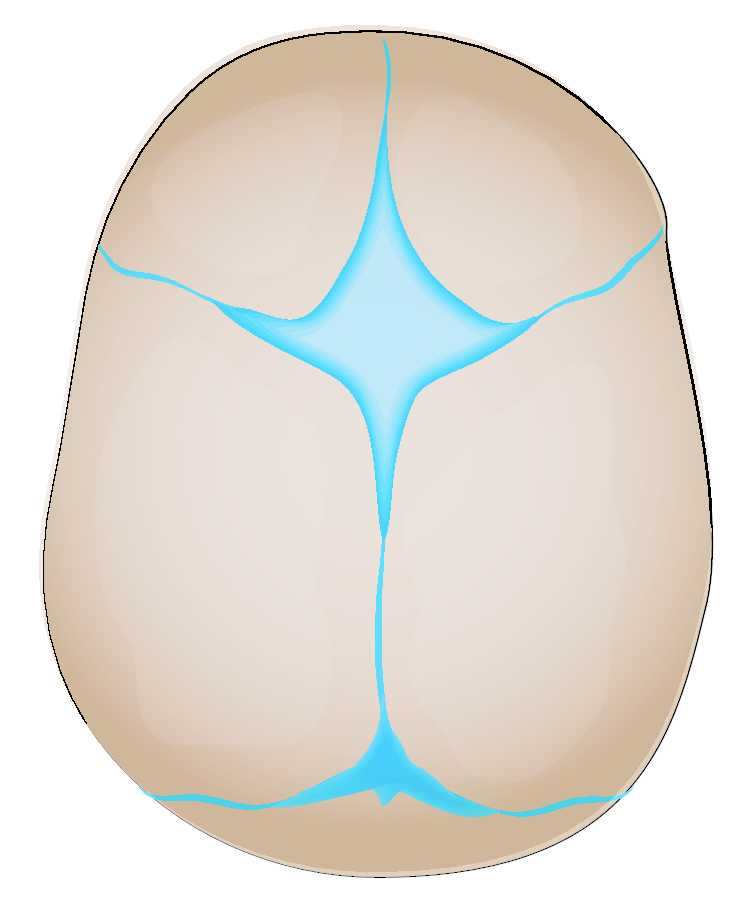
In addition, newborns’ heads have two fontanels (fon tuh NELZ), soft, open spaces where the bones have not yet joined—one above the forehead and one toward the back of the skull. These soft spots allow the skull to compress so that the head can fit through the birth canal.
The Skin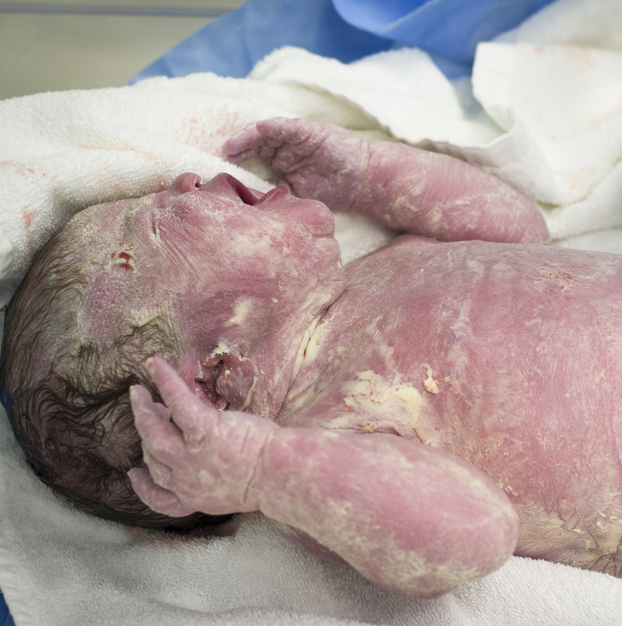
In the womb, the fetus is covered with a layer of a creamy white or yellowish substance called vernix. Vernix protects the fetus’s delicate skin from amniotic fluid, which can be irritating because it is slightly alkaline (pH > 7.0). After birth, vernix is no longer needed and can be washed off with warm water and a washcloth. Some newborns, especially those born prematurely, are covered in lanugo, fine hair that grows across their forehead, cheeks, back, and shoulders. All fetuses grow lanugo during normal prenatal development, but most lose this hairy covering as they add body fat during the third trimester of pregnancy. Babies that are born with lanugo will lose it within a few weeks. 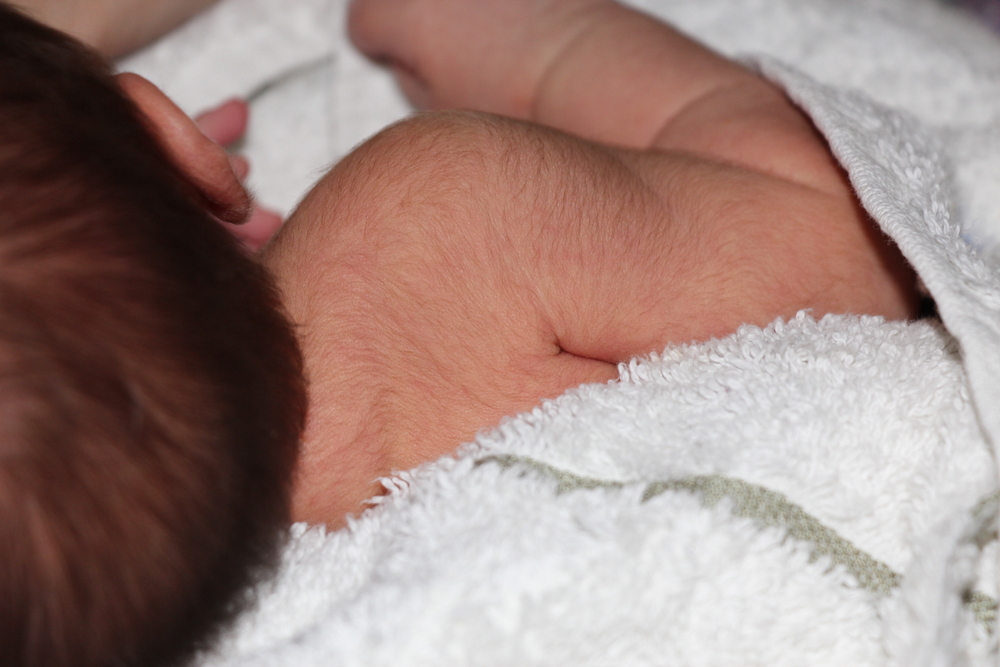
Hearing and VisionInside the womb, the fetus could hear only muffled sounds and detect light as a reddish glow through the mother's abdominal wall. Outside the womb, sound and light are much more intense and can initially be alarming to newborns. 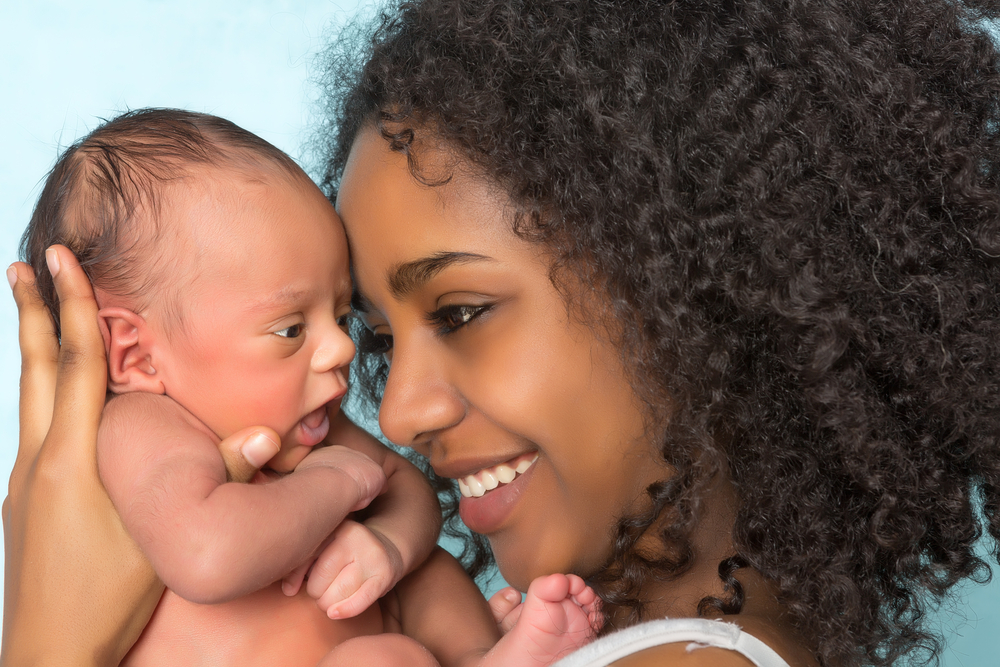
Newborns are very nearsighted and can see clearly to a distance of only about 12 inches. A newborn can recognize sounds it heard while in the uterus, especially the voice of its mother.
Reflexes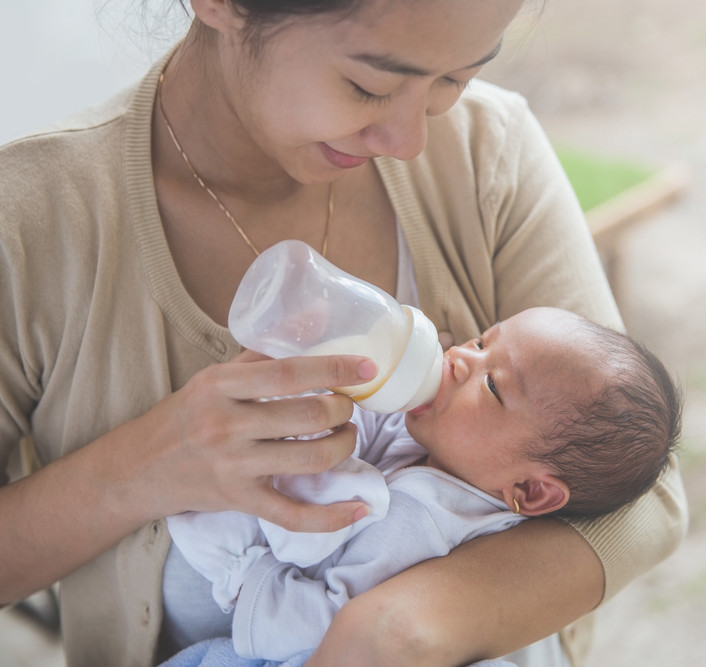
Newborns must be able to take a few critical actions for themselves, such as sneezing, yawning, and swallowing. These early actions are reflexes—involuntary, instinctive, automatic responses that are “hardwired” into a newborn’s nervous system. Sneezing, for example, helps to clear the baby’s nose of an irritant or obstruction. Effective swallowing helps a baby eat without choking. These two reflexes stay with us throughout our lives. The rooting reflex is a newborn’s response to being touched on the lips or cheek. Instinctively, the newborn turns to the touch and begins to suck. This reflex helps the newborn locate and ingest food. By four months of age, the baby uses its eyes to see the breast or the bottle, and the rooting reflex stops. The grasp reflex is the instinctive response of a newborn’s hand to close tightly over anything that touches its palm. When babies start to intentionally reach for objects at about 3 months of age, this reflex weakens; by 12 months, it has disappeared. 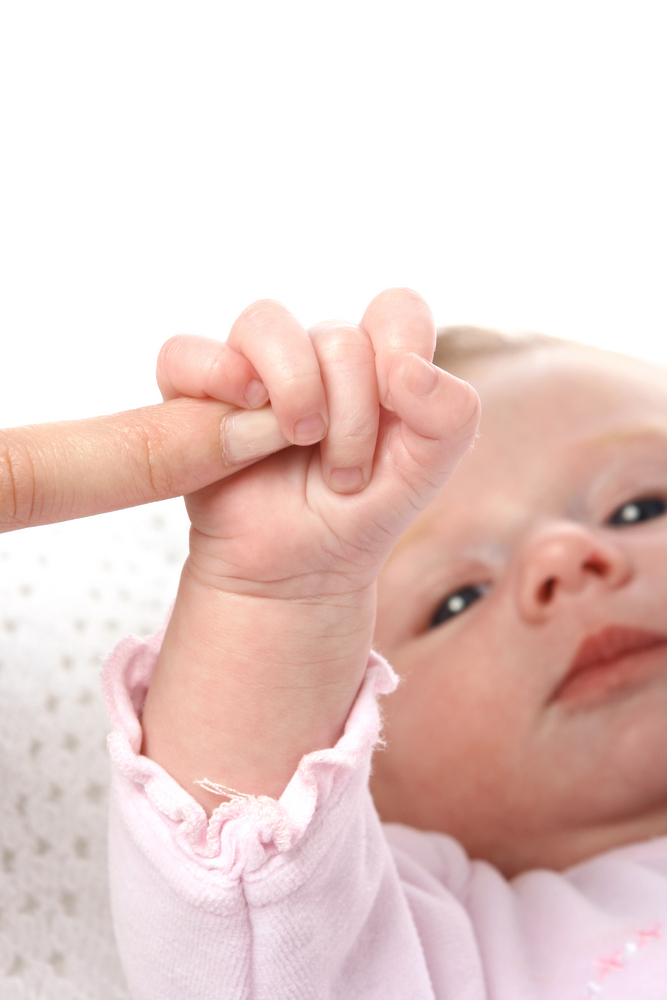
In humans, the grasp reflex charms a baby’s parents; but in apes, monkeys, and other animals with “hands,” this reflex can be the difference between life and death for a newborn that must hang on to its active mother. A loud noise or a touch on a newborn's abdomen causes a startle reflex. In this whole-body response, the newborn throws its legs up, extends and retracts its arms, and closes its fingers in a grasping motion. This reflex disappears when the baby is about 5 months old.
TemperamentTemperament refers to a person’s style of reacting to the world and relating to others. Believe it or not, newborns do have unique temperaments! Some babies prefer quiet, soothing voices. Others grunt and wiggle with excitement when spoken to in a playful voice. Some babies are very easy-going, and others have a meltdown at the slightest delay or discomfort. During the early days and weeks after birth, parents AND newborns begin to adapt to each other’s style. 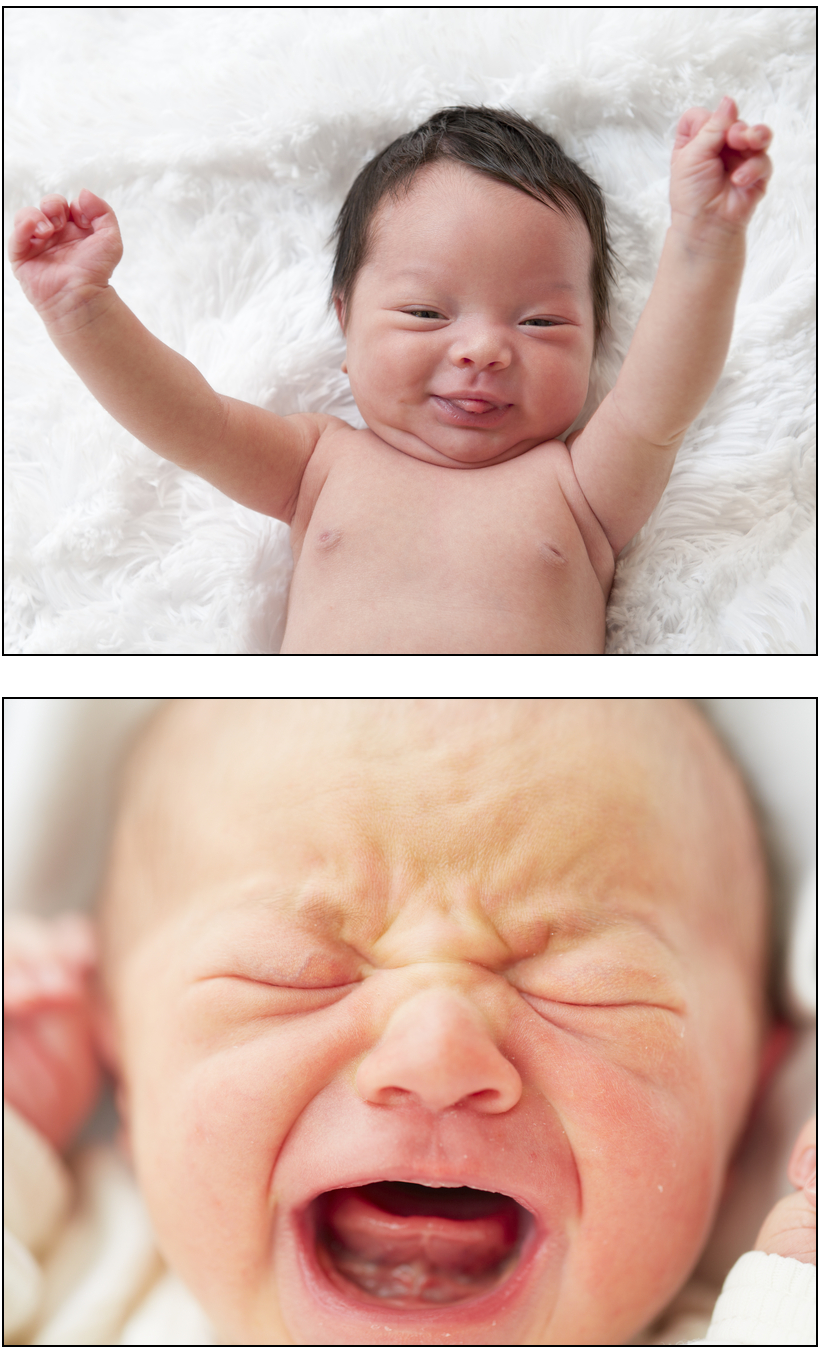
|
 |

