Mid-ocean ridges are underwater mountain system that have a valley, or rift, running down their spine.
 When rock material is buried deep within the Earth, pressure from the rock above causes the lower rock to be heated above the melting point. As the rock melts, it expands, forcing the melted magma to rise in search of a crack or vent to escape. The pressure builds beneath ocean ridges, causing the mountain ridges to rise. Often magma will escape through vents and cool quickly in the deep waters, forming new rock that adds to the size of the ridge.
Two forces account for the spreading of the mid-ocean ridges, and it not known which force is dominant.
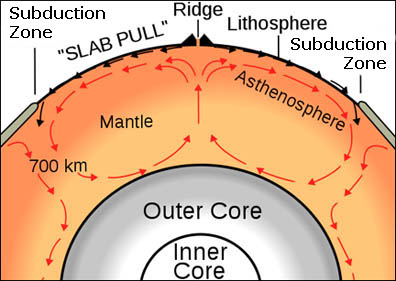
| Mid-ocean Ridge Spreading Forces | |
| Ridge-push happens when the growing volcanic mass on the ridge pushes the plates away from the ridge and towards the subduction zone, usually at the opposite sides of the plate. | |
| Slab-pull forces are a result of the convection currents within the mantle that cause tectonic plate movement. The convection currents pull the plates away from the ridge and toward the subduction zone. At the subduction zone, the plate is pulled below the overlying plate. | |
The two forces together cause the spreading of the mid-ocean ridges, resulting in the formation of mountains. Click on the headings below to learn about the longest mountain range on Earth,
| The Longest Mountain Range | |
| Name: | Mid-Atlantic Ridge |
| Length: | 10,000 km (6,200 miles) |
| Location: | Middle of the deepest part of the Atlantic ocean. |
| Height: | 3.2 km (2 miles) |
