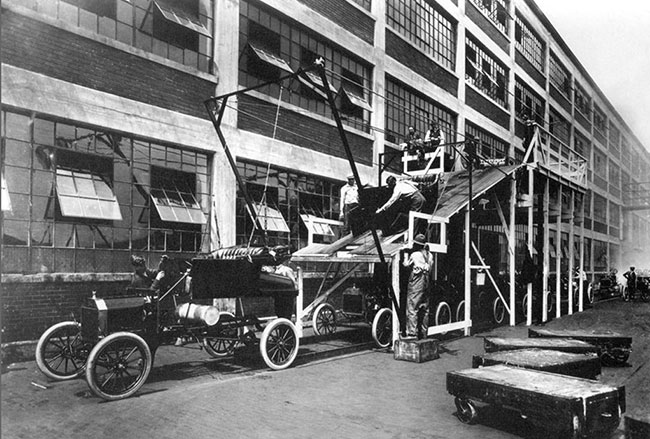
The American automobile really became a household item by the 1920s, thanks to the efforts of Henry Ford. Ford was known for mass-producing an affordable car called the Model T through the use of the assembly line. Ford also paid his workers a livable wage (one that allowed them to also buy his cars) and treated them well.
The automobile changed life in America. More jobs were created as the need for roads, gas stations, mechanics, motels, and roadside diners increased. Social life in America changed as well. As more people owned cars and travel became more frequent, young people experienced more freedoms and saw their horizons expand.
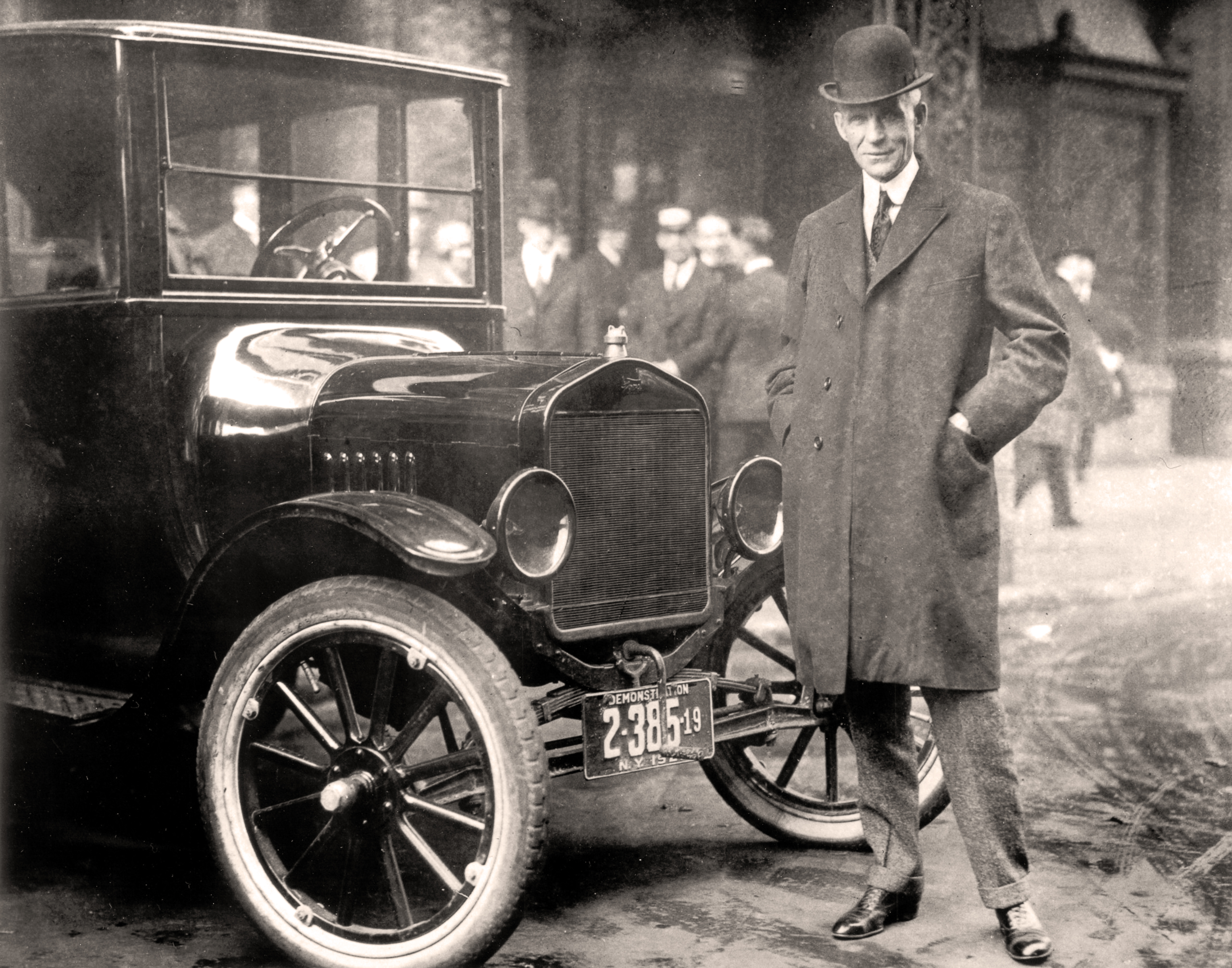
Henry Ford with a Model T in Buffalo, New York, in 1921
Often, people used installment plans to buy a new car. During the 1920s, automobile registrations jumped from 8 million to 23 million. America quickly became a “car culture,” in which people’s lives revolved around the automobile. The nation’s economy, too, revolved around the automobile. Almost four million Americans worked for auto companies or in related jobs. Detroit, Michigan, became the automobile manufacturing center of the world. Henry Ford was a pioneer in the manufacture of affordable automobiles with his Model T, which was built using assembly line methods. The car was sturdy, reliable, inexpensive, and available only in black. In 1914, Ford stunned the auto industry, and all corporate leaders, for that matter, by announcing that he would pay his workers the high wage of $5 per day. Workers were happy, and Ford had more potential customers as he steadily dropped the price of his Model T. By 1924, the car sold for less than $300. With the average industrial worker earning about $1,300 a year, many families could afford to buy a Model T.
By the mid-1920s, other automobile models challenged the Model T. General Motors cut into Ford’s sales by offering a line of cars in a range of colors and with features to improve passenger comfort. In 1927, Ford responded with the Model A, which had better engineering and came in several colors. Out of this competition came the practice of introducing new car models each year.
The automobile had a tremendous impact on other American industries. Americans’ love of driving called for new roads and highways. Highways, in turn, needed gas stations and rest stops. Businesses along major roads profited from the millions of people now traveling around the country by car. Tourism grew dramatically. The car boom affected industries that made products used in cars. The steel, rubber, and glass industries grew. During the 1920s, the oil industry shifted from producing lubricants to refining gasoline for automobiles. The automobile dramatically changed the lives of many Americans. Travel for pleasure became a regular part of American life. People could now go wherever they wished. Cars also contributed to the spread of suburbs. Because people could now drive to work, they could live in a suburb and still hold a job in the city.
| What method did Henry Ford use to mass-produce the automobile? | the assembly line |
| About how much did the Model T cost in 1914? | $490 |
| What did the government pass in 1921 to create more roads and highways? | the Federal Highway Act |
