At the time of the cease-fire in 1953, South Korea was economically at a disadvantage. The best industries and hydroelectric plants were in Communist North Korea, and South Korea was overflowing with war-weary refugees. Communist states, such as China and the Soviet Union, became North Korea's new trading partners. South Korea, on the other hand, allied itself with the United States and Japan.
With aid from its new economic partners, South Korea became industrialized, and the South Korean government actively encouraged the development of both heavy and light industries. To solve its energy problems, South Korea built nuclear power plants, and as a result, the country witnessed an impressive rate of economic growth in the ensuing years. South Korea also experienced the development of a new middle class, as well as an increase in its role in international trade and politics. Today, South Korea is a major exporter of textiles, clothing, automobiles, and electronic goods. It is considered one of the new industrial powers of the region surrounding the Pacific Ocean.
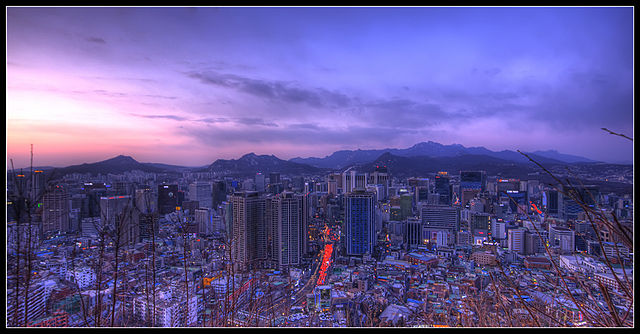
Rapid industrialization has pulled at the social fabric of Korean culture. In an effort to compete economically with Japan and Western countries, family-owned businesses in South Korea have often treated workers unfairly. As a result of this conflict, massive labor strikes and political struggles have at times disrupted the country's economic growth.
Under Communist leadership, North Korea has continued to evolve from an agricultural to an industrial society. Despite the fact that it has greater natural resources than South Korea, North Korea lags far behind its neighbor in its standard of living. With the fall of the Soviet Union in 1991, North Korea lost its main economic supporter, and immediately supplies dwindled. Fuel and spare parts are still scarce in North Korea, and as a result, factories have closed. In addition, hospitals sometimes have no heat or running water. When a severe food shortage hit in 1997, international aid came to North Korea's rescue. People are less hungry now, but the situation remains dire.
