Beyond its political divisions, the Korean Peninsula is a land of opposites. The two countries that occupy its regions have different climates, landforms, and resources.
Click images to enlarge.
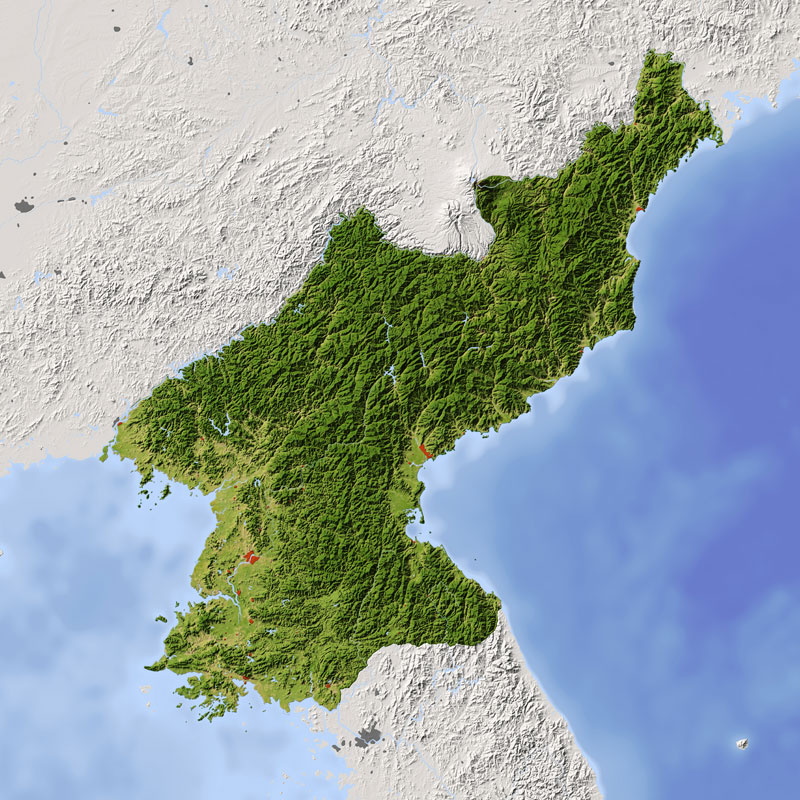
North Korea has about 23 million people and is less densely populated than South Korea. P'yongyang, the capital, is the only city with a population of more than 1 million. Because it is located near the Asian mainland, North Korea is influenced by nearby continental climate regions. The climate is similar to that of southern Siberia with short, cool summers and bitterly cold winters. The land itself is mountainous and rugged, and its fast-flowing mountain rivers have been harnessed to create hydroelectric power for its industries. North Korea also has some of the richest natural resources in East Asia, including coal, copper, iron ore, lead, tungsten, and zinc.
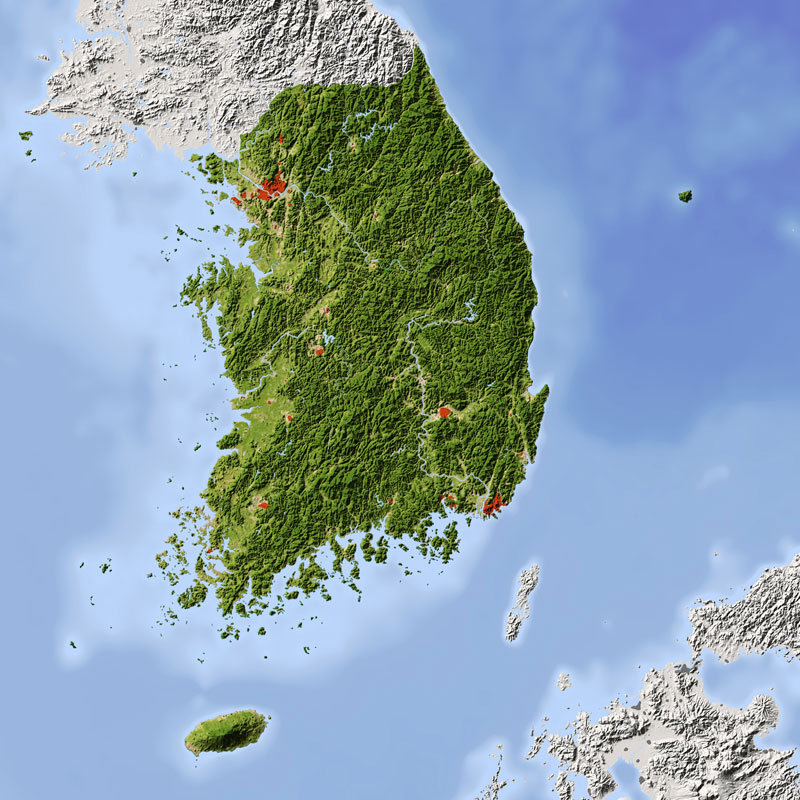
In contrast, South Korea, which is home to about 47 million people, is one of the most densely populated countries in the world. Almost a quarter of the population is concentrated in the capital city of Seoul. South Korea is influenced by the moderating effects of the surrounding seas, and parts of South Korea are actually subtropical in climate. It is also less mountainous than North Korea and has wide, rolling plains. Because of its terrain and warmer climate, South Korea is better suited for agriculture than is its neighbor to the north.
