Before you learn the main characteristics of prokaryotic cells, you need to learn a little more about what types of organisms are prokaryotic. Prokaryotic organisms are divided into two domains - bacteria and archaea. Bacteria are one-celled prokaryotes that were among the first living organisms on earth. Archaea are also prokaryotic one-celled organisms, but they have more in common with eukaryotic organisms than bacteria do. Use the tabs below to learn more about bacteria and archaea.
Archaea
Bacteria
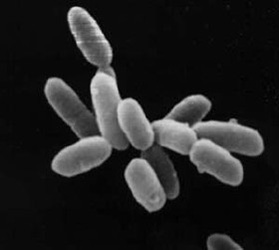
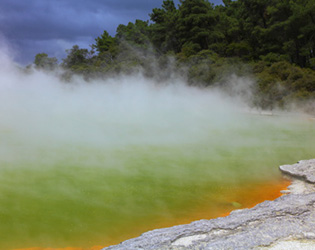
The halobacteria shown in this image are an example of archaea. Halobacteria were named before it was understood that there was a difference between archaea and bacteria. Archaea were originally classified as bacteria and called archaebacteria. As scientists learned more about these organisms, they determined that they are not bacteria and are, in fact, more like eukaryotic cells than bacterial cells are. For example, archaea have enzymes involved in DNA transcription and translation that are more similar to those used by eukaryotic cells. Archaea also have properties that are not shared by eukaryotic cells or bacteria. One example is that the cell membranes of archaea use lipids that are not used by other organisms. Archaea are also considered "extremophiles" because they can survive in extreme conditions like the hot spring shown in the picture above or in salt lakes.
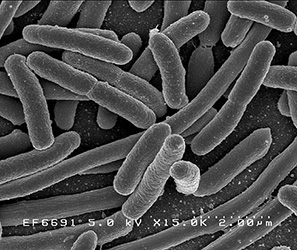
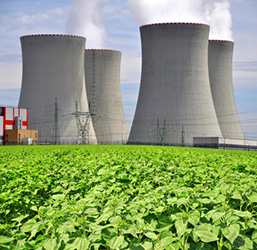
Bacteria, like the E. coli in this image, are similar in size and shape to archae. However, bacteria can also be spheres or spirals. Bacteria can also survive in extreme conditions, such as in the radioactive waste produced by the nuclear power plant you see in the image above. As we continue in this lesson, you will learn more about the structure of bacteria.
Question
How do the two domains (archae and bacteria) differ?
