Now What?
Finding figurative language is just the first step. You also need to understand what it means.
Goal:
Goal:
Even after you find an example of figurative language in a poem, you may not understand what the poet is trying to say. Because figurative language is not a literal translation of the poet's thoughts, you have to do some thinking to interpret, or figure out, that poem's meaning. Let's look at the A. R. Ammons poem again.
|
After Yesterday After yesterday afternoon's blue clouds and white rain the mockingbird in the backyard untied the drops from leaves and twigs with a long singing. |
|
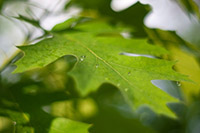
The figurative language in this poem is "the mockingbird in the backyard untied the drops from the leaves and twigs." To understand this fancy use of language, it helps to stop and think about exactly what's happening in a literal sense. A mockingbird is, of course, a bird. Leaves and twigs are on trees, so that means this bird is in a tree.
Now can you guess what it means to untie raindrops? If not, here's a hint for you: What happens when you shake a tree limb after it's rained? If you're standing under the tree, you'll probably get soaked! Maybe this poet is saying that when the bird landed in the tree, drops suspended on the limbs and twigs showered to the ground. And it might look like the bird "untied" these drops and let them fall.