Reading
 Identify main ideas and details in nonfiction.
Goal:
Goal:
 Today, we will look at main idea and details in nonfiction. Click through the tabs to discover the differences between fiction and nonfiction and to find definitions of main idea and detail. Then, click the last tab to practice finding the main idea. Tomorrow, we will read our story for the first time. The following day, we will answer questions about it. By the end of the week, we will identify the main idea and details of our story.
Nonfiction/Fiction
Main Idea/Details
Example
Fiction includes characters and events that are made-up. Fiction is not true.
Nonfiction includes real people, events, and animals. Nonfiction is true.
Let's look at the differences between fiction and nonfiction.
| Fiction | Nonfiction |
| Not real | Real |
| Entertains | Informs |
| Pictures | Charts, graphs, photos |
| Read in order | Order usually doesn't matter |
| Beginning/middle/end | Table of contents shows organization |
| Problem and solution | Facts |
| Story Elements: characters, setting | Text Features: charts, graphs, headings |
Can you tell the difference between nonfiction and fiction? Look at the topics below. Which examples are fiction? Which examples are nonfiction? Click on the examples to see if you are correct.
| 4th of July, sharks, Europe |
nonfiction |
| talking worms, singing books |
fiction |
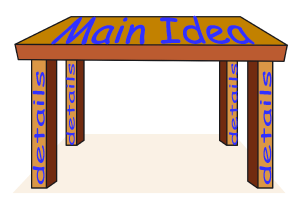 The main idea is what the passage is mostly about.
Details are facts that support the main idea.
A table needs legs to support its weight. A main idea needs details to support or prove it. How can we find the main idea when we read? Look at the slideshow below to learn how to find a main idea.
|
Reading a title may offer a clue as to what the story or passage is mostly about.
A heading is the title of a section in text. It can help you find the main idea in specific parts of a nonfiction text.
Read the sentences in a text to see what the facts are supporting.
Looking at pictures can provide clues as to what the text is mostly about.
Sometimes an ending will state the main idea.
What is the story/ paragraph/ passage mostly about? Do the sentences support the main idea? |
 |

Read the nonfiction passage below. If needed, reread the tips from the slideshow on the previous tab on how to find the main idea. After reading the passage, see if you can find the main idea.
Hibernation
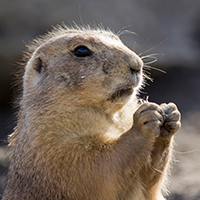 Groundhogs, also known as woodchucks, hibernate each year. When it becomes cold, they sleep in their burrows. During the summer months, groundhogs eat as much food as they can. This allows them to use their body fat to stay alive while hibernating. A groundhog's heartbeat slows down and its temperature drops during hibernation. Groundhogs end their hibernation in the spring when the weather warms up.
Detail 1: Groundhogs sleep in their burrows when the weather becomes cold.
Detail 2: Groundhogs eat a lot during the summer in order to hibernate.
Detail 3: The heartbeats of groundhogs slow down and their temperature lowers.
Look at the details above. What is the main idea that these details support?

Groundhogs hibernate during the cold months.
Did You Know?
The main idea can also be called the
central idea. Their meanings are alike because they tell the reader the
most important idea of the story.