Writing
 How do I build a rough draft?
Goal:
Goal:
 It's time to write the rough draft of your narrative. Please find the graphic organizer that you completed yesterday. You will need that today to help you build your rough draft.
Click through the tabs below to help you build your rough draft.
Title
Topic Sentence
Body Sentences
Closing Sentence
It's important to start with a title. What is your story about? That will help you come up with a title.
Do you remember the example paragraph we looked at together? It was telling a story about a bike accident. The title was "My Bicycle Accident."
Give your paragraph a title.
We need to begin our paragraph with a topic sentence. This sentence introduces readers to your topic or grabs their attention. Let's take a look at the topic sentence from "My Bicycle Accident."
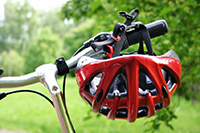 Last month, I had the scare of a lifetime when I got into a bicycle accident.
This sentence lets the reader know that the paragraph will be explaining a bicycle accident that happened last month. We also know that it must have been quite an accident since he calls it "the scare of a lifetime."
Introduce your paragraph by writing your topic sentence.
Now, it's time to get into the actual story. Use your graphic organizer to help you with this part. You will need to include the beginning, middle, and end of your story. Remember to include as many details as you can.
Let's take a look at the example paragraph again.
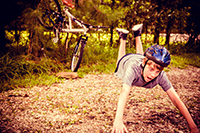 My brother and I were riding our bikes down a steep hill at the end of our street. I was going so fast that I hit a bump in the road and flipped over my handlebars. I hit my head hard on the pavement, and my helmet was cracked. My brother raced home and got our mom. She told me that I was lucky that I was wearing my helmet. Without the helmet, it would have been my head that got cracked. I got the wind knocked out of me, and I was pretty scared, but otherwise I was fine. My mom told me that I did not need a trip to the hospital.
This paragraph explained exactly what happened in the accident. Details are used so that we can picture what the accident might have looked like. Remember to retell your story in the order that it happened, using words like first, next, and finally to make sure readers know the order things happened. Also, use important details when you can.
Let's wrap up your paragraph by writing your closing sentence. You are reminding the reader what your paragraph was about or summarizing your story. Maybe there was a lesson learned from your story that you could share.
Take a look at how the example paragraph was closed.
 I don't ride down that hill quite as fast anymore, but I still always wear my helmet.
The closing sentence reminded us that the paragraph was about the bike accident and that he learned something from his experience. He still likes to ride his bike, but he understands even more now how important helmets are.
Think about how you want to end your paragraph, and add your closing sentence.