Now that you have seen examples of the major parts of animal cells and plant cells, it's your turn to design a cell. You will need to select household items that you can use to make a three-dimensional (3D) model. For example, you could use a Ziploc bag with Jell-O in it to represent an animal cell and then find other foods to represent the organelles in that cell. You could use a super ball to represent a nucleus and peeled grapes to represent vacuoles. Or you may use a shoebox to make a diorama of the cell and then hang objects in the box to represent the organelles. You could use pipe cleaners to represent the cytoskeleton and marbles to represent mitochondria. Be creative and resourceful--use what you find around your house or, if you prefer, buy some inexpensive items at a craft store to use for your model.
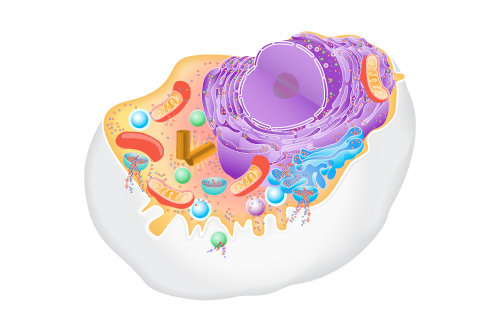
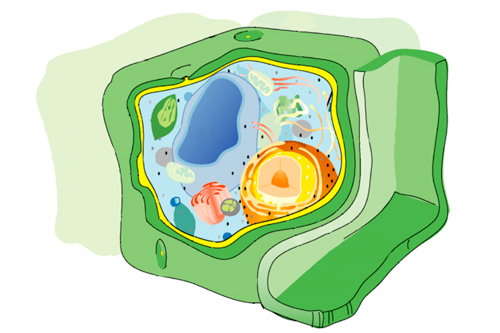
Use the attached worksheet to create your models of a plant cell and an animal cell. Before you begin, look at the cell diagrams below. Click each cell to reveal a list of organelles you will need to include in your own model. If you don't remember any of these organelles, go back through the unit and review before you use the worksheet to make your own cell model.
When you have completed your models, take a picture of each one, and submit the images to your teacher.