The first step in classifying animals according to their body plans is being able to identify them as being asymmetrical or symmetrical. Asymmetrical body plans don't have a regular arrangement of parts; rather, their body plan is arranged randomly and without a clear type of organization. Symmetrical body plans have a regular arrangement of parts, with equal parts arranged around a central axis or two pieces that are mirror images of each other.
Would you say that human body plans are symmetrical or asymmetrical? Think about the answer to this question, then Click the Show Me button to see if you're correct.

Humans have body plans that are symmetrical.
If an animal body plan is identified as being symmetrical, the next step is identifying which type of symmetry the animal has. Read through the slide show below to learn about the characteristics of both types of symmetries.
Radial Symmetry
One type of symmetry is called radial symmetry. Radial symmetry refers to body plans that are arranged around a central axis, sort of like how the spokes around a wheel are arranged around the axle. Radially symmetrical animals are pretty easy to spot because they generally have a circular or tubular shape, like the sea anemones pictured. You can think of radially symmetrical animals as being divided into equal parts, just like the cheese pizza pictured. Sides of Radial Body Plans
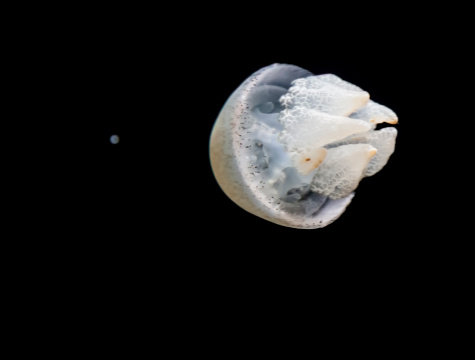
Radially symmetrical animals don't have a clear left or right side. But they do have an oral side and an aboral side. The oral side refers to the side that the mouth is on. The aboral side refers to the side that does not have the mouth. In jellyfish, for example, the side of the jellyfish with tentacles is the side the mouth is on, while the side of the jellyfish without tentacles does not contain a mouth. In the jellyfish pictured, is the oral or aboral side facing you? Once you have your answer, click the Show Me button to see if you're correct.
It is the oral side because it is the side that contains the mouth. Bilateral Symmetry
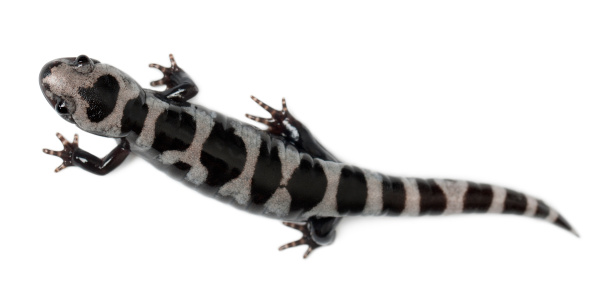
If the body plan has a definite symmetry but isn't tubular or circular shaped, it is most likely identified as having bilateral symmetry. Animals with a body plan that is bilaterally symmetrical are made of two equal pieces that are mirror images of each other. Some examples of animals that have body plans with bilateral symmetry include the salamander and koala. Sides of Bilateral Body Plans
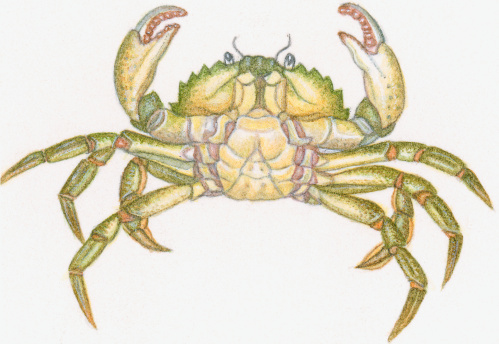
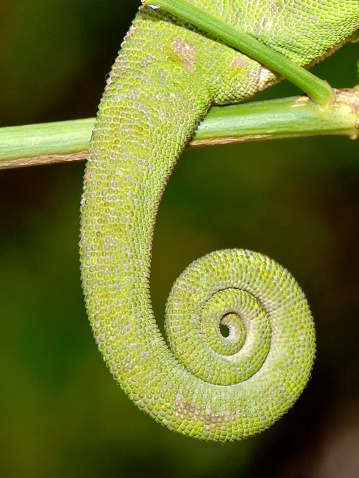
Unlike radial animals, bilateral animals have clear left and right sides that are mirror images of each other. There are also terms to describe certain regions of a bilateral body plan. The head end is the anterior side, and the tail end is the posterior side. The front (or tummy) is the ventral side, and the back is the dorsal side. Look at the bilaterally symmetrical animals pictured. They are all displaying four different sides. Using the terms anterior, posterior, ventral, and posterior, write down what side each animal is displaying. Once you have all your answers written, click the Show Me button to reveal the correct answer.
The crab is displaying his ventral side. The butterfly is displaying her dorsal side. The dog is displaying his anterior end. The chameleon is showing his posterior end. Cephalization
Another special feature of the bilateral creatures is the phenomenon of cephalization, which is a concentration of nerve cells on the anterior end of an animal, forming a head and brain. Some of the most complex animals are bilaterally symmetrical, and this complexity is greatly influenced by the presence of a brain. |
 |







In the activity below, use your knowledge of asymmetry, radial symmetry, and bilateral symmetry to choose the body plan category that each word or phrase belongs to. To make your selection, drag the circle from the left to the correct term on the right.
|
irregular shape
|
asymmetry
radial symmetry
bilateral symmetry
|
|
anterior side
|
asymmetry
radial symmetry
bilateral symmetry
|
|
aboral side
|
asymmetry
radial symmetry
bilateral symmetry
|
|
ventral side
|
asymmetry
radial symmetry
bilateral symmetry
|
|
cephalization
|
asymmetry
radial symmetry
bilateral symmetry
|
Complete
