Objects can be defined as symmetrical or asymmetrical. Objects with symmetry have a specific arrangement of parts--that is, they can be divided in half to create two mirror images or they can be divided from a central point into equal pieces that are indistinguishable from each other.
So what do symmetry and asymmetry have to do with biology? Biologists can use this concept to classify animals according to their body plan. An animal's body plan describes the way it is shaped, or its specific architecture.
Read the tabs in the activity below to get comfortable with determining whether an animal's shape is asymmetrical or symmetrical. This is the first step in classifying animals according to their body plans.
Asymmetry
Symmetry
![By Oliver Voigt (Oliver Voigt) [CC-BY-SA-2.0-de (http://creativecommons.org/licenses/by-sa/2.0/de/deed.en), GFDL (http://www.gnu.org/copyleft/fdl.html), CC-BY-SA-3.0 (http://creativecommons.org/licenses/by-sa/3.0/) or CC-BY-SA-2.5-2.0-1.0 (http://creativecommons.org/licenses/by-sa/2.5-2.0-1.0)], via Wikimedia Commons](https://s3.amazonaws.com/cms.accelerate-ed.com/image/de20de45-3b4b-4731-be4c-7e7e5e7d807f.png)
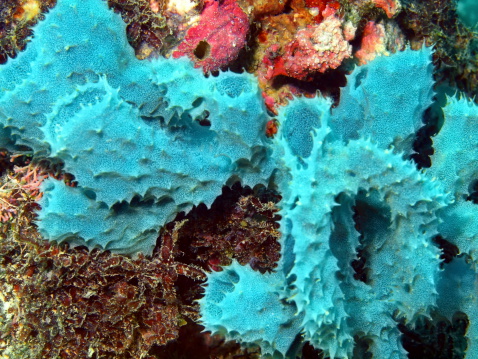
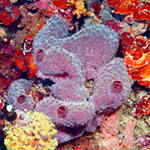
Asymmetrical animals are the simplest of all animals, like the bright blue sponge pictured on the left and the tiny placozoan pictured on the right. Notice how there is no obvious way to divide these animals' bodies into equal parts or two parts that are mirror images of each other, thus these animals are asymmetrical.
Animals with an asymmetrical body plan aren't complex at all, but they get through life just fine. They usually remain stationary as adults and are typically sea creatures who simply filter ocean water for food particles.
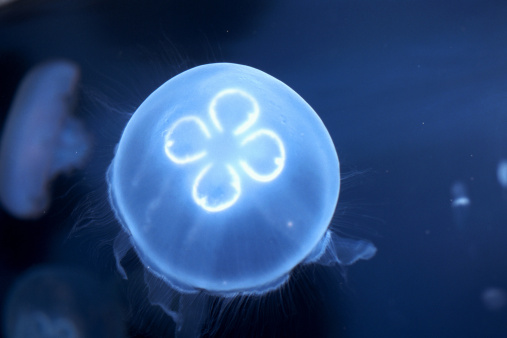

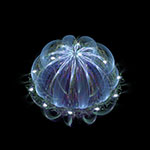
There are two main types of symmetries in animals. One type occurs in circular or tube-shaped animals. Those animals are shaped like wheels or pies cut into many equal pieces. Can you see how the jellyfish body pictured on the left is arranged like a wheel?
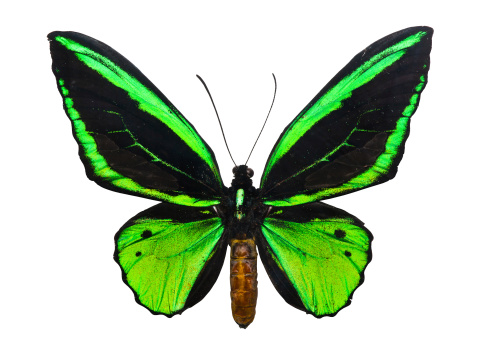
The other type of symmetry, which occurs in hotdogs and tacos, applies to animals that have two eyes and a digestive tract. In those animals, an invisible line can be drawn down the center of the body from the eyes all the way down through the tail (or the equivalent of a tail). Can you picture an invisible line going down the center of the butterfly, starting at the top of her head, in between her eyes, all the way down through the length of her body? Notice how on both sides of this invisible line are two mirror images of each other.
In the activity below, drag each animal to the category its body plan belongs to.
Asymmetrical or Symmetrical |
asymmetrical
|
|
Asymmetrical or Symmetrical |
symmetrical
|

|
Asymmetrical or Symmetrical |
asymmetrical
|
|
Asymmetrical or Symmetrical |
asymmetrical
|
|
Asymmetrical or Symmetrical |
symmetrical
|
|
|
Asymmetrical or Symmetrical |
symmetrical
|
|
|
Asymmetrical or Symmetrical |
asymmetrical
|
|
|
Directions or question |
symmetrical
|
|
|
Complete
