All animals are organized in a similar way, and there are eight common features to all animals: heterotrophy, diploidy, lack of cell wall, sexual reproduction, multi-cellularity, mobility, blastula formation, and presence of tissue. But the differences among the members of the animal kingdom allow them to be classified into phyla.
Do you remember the concept of taxonomy and classification? Define taxonomy and list the order of hierarchy in classifying living things. Once you have your answer, click the Show Me button to see if you're correct.

Taxonomy is the science of defining groups of organisms according to certain characteristics. The hierarchy of classifying organisms is as follows: domain, kingdom, phylum, class, order, family, genus, species.
Body plans are important because they are a determining factor in what phyla an animal belongs to. In the activity below, read the tabs to learn how body plans are used to classify animals.
Asymmetrical body plans
Radial Body Plans
Bilateral Body Plans
 All animals that have an asymmetrical body plan are classified into either the phylum Placozoa or the phylum Porifera.
Phylum Placozoa is a very small phylum that consists of only two species, and both are very small animals (about 2-3 mm in diameter). They look very much like a tiny blob, are irregular in shape, and are known to live in tropical oceans.
Phylum Porifera consists of sponges. In fact, the name Porifera, comes from the numerous pores found on the surface of sponge bodies. As you can see in the picture of the sponge, there is no clear pattern or arrangement of parts, therefore it has an asymmetrical body plan.
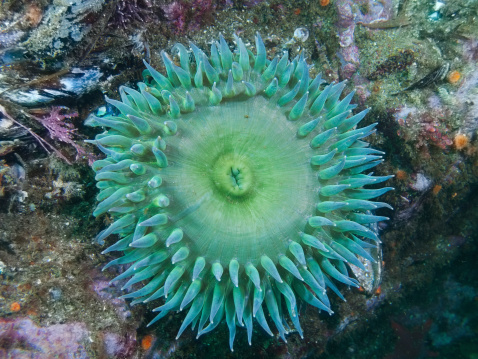 If an animal has radial symmetry, it will be classified into the phylum Cnidaria. Cnidarians consist of jellyfish, sea anemones, and corals. Check out the picture of the sea anemone. Can you see how its body is arranged radially around a central axis?
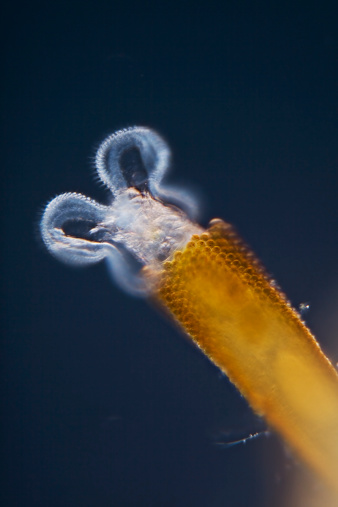 Rotifers are called wheel animals and belong to phylum Rotifera. |
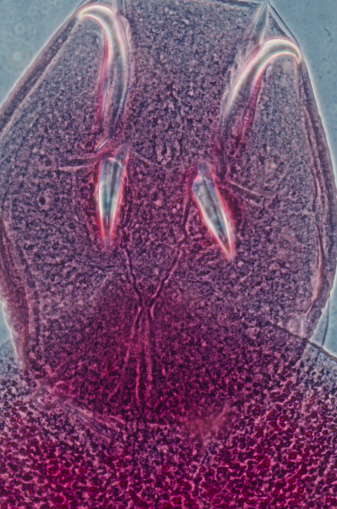 Microscopic roundworms are classified into phylum Nematoda. |
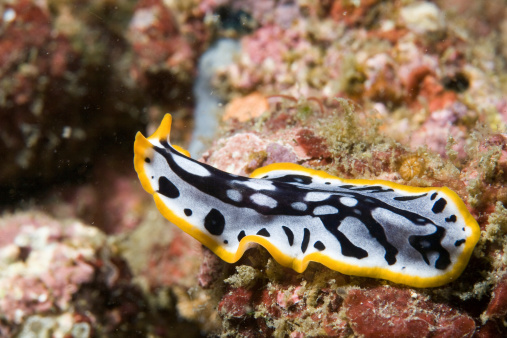 Flatworms are classified into phylum Plathelminthes. |
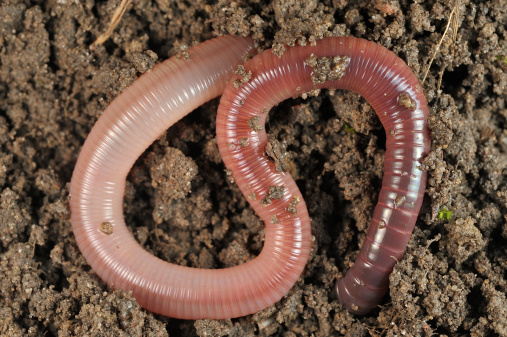 Earthworms are classified into phylum Annelida. |
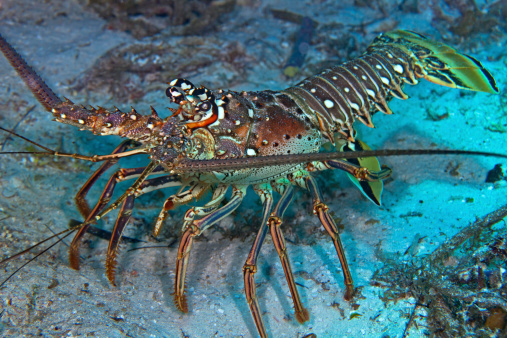 Lobsters and other crustaceans are classified into phylum Arthropoda. |
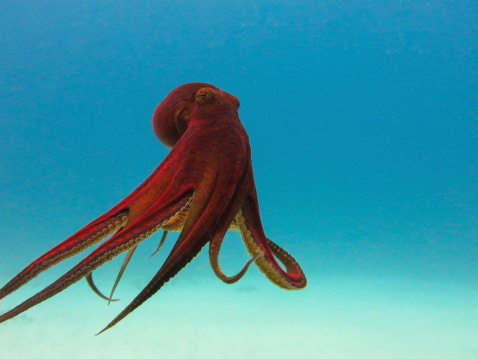 Octopi are classified into phylum Mollusca. |
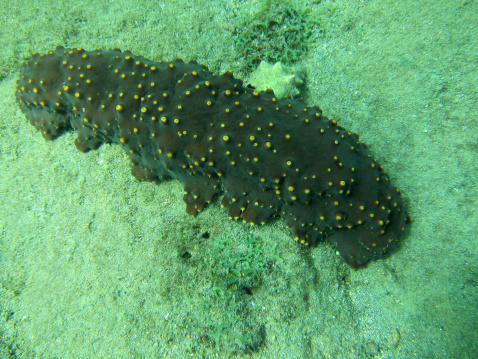 Sea cucumbers are classified into phylum Echinodermata. |
 All mammals, like this raccoon, are classified into phylum Chordata. |
Aside from Placozoans, Poriferans, and Cnidarians, almost all other animals have body plans that are bilaterally symmetrical. Notice how all the animals pictured have a central dividing line and both sides of that line are mirror images of each other.
Depending on a plethora of characteristics, the bilaterally symmetrical animal may be classified into one of about thirty phyla. Listed below are the most common animal phyla with bilateral body plans.
| Platyhelminthes | flatworms |
| Nematoda | roundworms |
| Annelida | earthworms |
| Arthropoda | insects, arachnids, crustaceans |
| Mollusca | oysters, octopi |
| Echinodermata | starfish, sea urchins, sea cucumbers, sand dollars |
| Chordata | mammals, birds, fish, reptiles, amphibians |
| Use the dart to pop any balloons that refer to animals with bilateral body plans. |
Animals with a bilateral body plan do not belong in phylum Cnidaria, phylum Placozoa, phylum Porifera.
