You've seen examples of how textual evidence can be used to support a comparative claim. Now try supporting a claim or your own. Choose a topic to write about, write your thesis or claim statement, cite your evidence, and explain how it all fits together.
Use the tabs below to review how to complete each of these steps. Then use the Supporting a Comparative Claim worksheet to share your claim and the evidence that supports it. When you have completed the worksheet, submit it to your teacher. Click the Activity button to begin the worksheet. Click the Rubric button to see how your work will be graded.
Choose a Topic
State Your Claim
Provide Evidence
Explain Yourself
You have just two choices of topics for this assignment: You can compare two short stories from different cultures, or you can compare the video version of a news story to a text-only version. The two short stories are titled "The Lady or the Tiger?" and "A Lady's Tale." The video news story is "America's New Paths in Space," and the text article is "Your Future in Space." Use the links below to review these works. Then decide what topic you want to use to practice supporting a comparative claim.
| Option 1 | |
| The Lady or the Tiger? | |
| A Lady's Tale. | |
| Option 2 | |
| America's New Paths in Space |
|
| Your Future in Space | |
Once you've chosen a topic, write a thesis statement that you believe you can support with textual evidence. Remember that your thesis statement should be a comparative claim that other readers or viewers are not likely to accept without some proof. Review these examples of strong comparative claims.
 While "The Gifts of the Little People" emphasizes the consequences of characters' choices, "The Two Brothers" demonstrates how character traits drive decisions.
Both stories condemn greed, but one of them goes much farther in emphasizing the value of generosity.
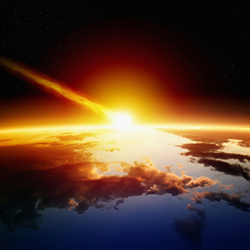 The video about the meteor strike in Russia is likely to make viewers more nervous about meteorites, while the text article is more likely to reassure readers about meteor strikes.
The text article creates a sense of drama and danger through word choices that affect tone, while the video script lacks these effects and is flat in tone
There are several ways you can cite evidence for your claim. You can copy a direct quote from one of the texts, you can paraphrase a passage, or you can summarize a section or the entire text. Before you look for evidence for your claim, review each of these methods using the chart below.
| Method | Example | How to Do It |
| direct quote | "Some said an object had been shot down by Russian air defense missiles to prevent further destruction. Others believed that a satellite had fallen, or some kind of weapon had been aimed at Russia. Still another theory: The sonic booms and flashes of light were the result of a top-secret U.S. weapons test." | Use the author's exact words as evidence. |
| paraphrase | In a section on reactions to the event, the reporter listed some of the townspeople's immediate concerns: Either a broken satellite had hit them, or some governmental agency was involved. Few suspected a chunk of flying space rock. | Rewrite a specific passage in your own words. |
| summary | A report about the event included townspeople's initial--and incorrect--suspicions regarding the cause of the impact. | State the main idea of the passage or text. |
Just because you cite evidence that you believe supports your claim, that doesn't mean that your essay's readers will see the connection. To support a comparative claim, you need explain why or how each piece or evidence works to prove your case. Review these examples of explanations.
| Evidence | Explanation |
| In "Rikki-Tikki-Tavi," the mother character is terrified of the idea that a snake might injure her child. In fact, she is willing to allow a wild mongoose in her child's room, rather than consider the possibility that a snake might get in. The father character explains, “Teddy’s safer with that little beast than if he had a bloodhound to watch him. If a snake came into the nursery now…” And Kipling adds "But Teddy’s mother wouldn’t think of anything so awful." | By describing the mother's fear of snakes and her anxiety for her child's safety, the author has created a sense of anxiety, and has foreshadowed the possibility that a snake might well endanger the child. |
| In "Snakes Alive!" the author describes his experience working with snakes as a risky venture: "I was also taught the proper way of holding and handling snakes. On the third day, I was bitten by a wolf snake." | Although the author of "Snakes Alive!" eventually becomes comfortable with snakes, this example shows how the image of the snake can be used to create a sense of anxiety in the reader. In this case, the description of a snake bite is intriguing, and makes readers want to know more about this terrible incident. |
